
History of TMS (Part 5)
Theta Burst Stimulation: A Game Changer
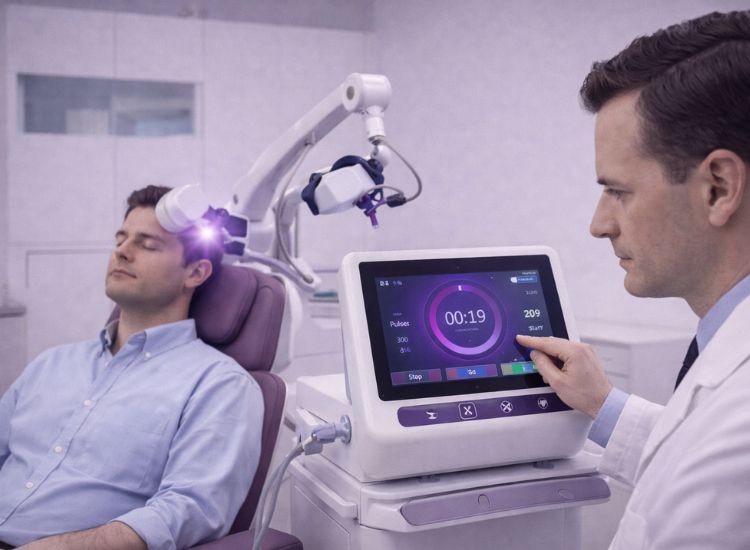
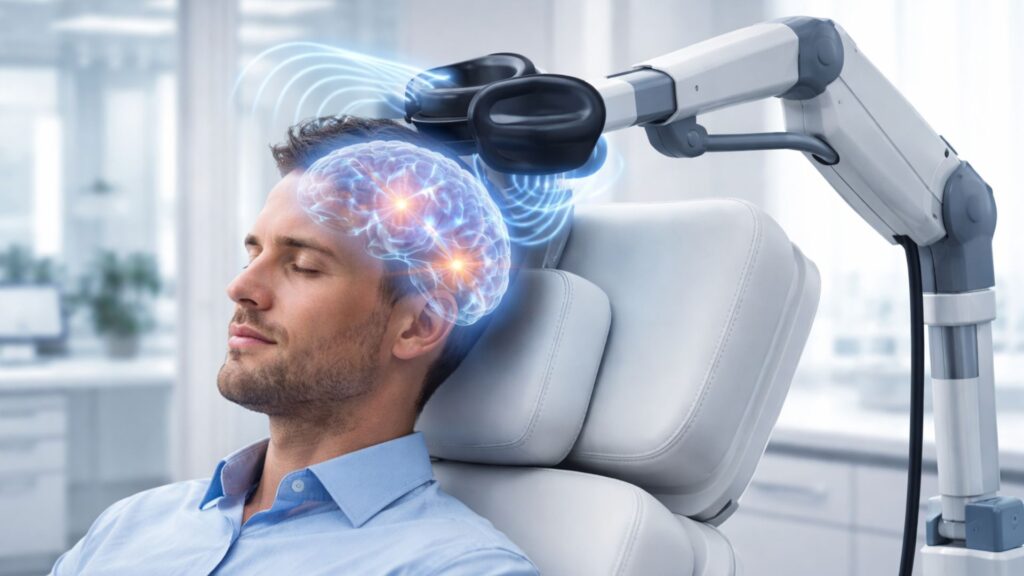
Theta burst stimulation (TBS) is an advanced and efficient form of repetitive transcranial magnetic stimulation (rTMS) introduced in the early 2000s. Unlike traditional rTMS, which delivers evenly spaced pulses, TBS mimics the brain’s natural firing patterns by delivering short bursts of high-frequency stimulation. This biologically inspired stimulation enhances neural plasticity and leads to longer-lasting effects on brain activity in a significantly shorter treatment time.
TBS has demonstrated comparable or superior efficacy to traditional rTMS while requiring only a fraction of the session duration. This has made it a preferred technique for neuromodulation in clinical and research settings (Huang et al., 2005).
How TBS Works: Mechanisms of Neural Plasticity
TBS is based on the theta frequency (4–7 Hz) oscillations observed in brain circuits involved in memory, learning, and motor control. These rhythmic bursts of activity occur naturally in brain regions like the hippocampus and neocortex, where they strengthen or weaken synaptic connections, facilitating long-term potentiation (LTP) and long-term depression (LTD)—two key mechanisms of neuroplasticity.
By delivering bursts of three pulses at 50 Hz, repeated at 5 Hz intervals (theta rhythm), TBS interacts with endogenous brain oscillations, producing a more profound and lasting effect on neuronal excitability compared to conventional rTMS.
The longer-lasting changes in brain function are due to:
- Stronger synaptic plasticity:
- Intermittent TBS (iTBS) enhances LTP, which strengthens synaptic connections, increasing cortical excitability.
- Continuous TBS (cTBS) facilitates LTD, which weakens connections, reducing cortical excitability.
- Greater metabolic and neurochemical changes:
- TBS modulates glutamate and GABA, the brain’s main excitatory and inhibitory neurotransmitters.
- This contributes to more sustained changes in cortical networks, beyond the duration of stimulation (Chung et al., 2016).
- More efficient stimulation of neural networks:
- TBS leverages the brain’s inherent rhythms, leading to greater functional reorganization of neuronal circuits.
- This results in longer therapeutic effects with shorter stimulation periods.
These mechanisms explain why TBS can produce effects lasting hours to days, compared to traditional rTMS, which often requires longer treatment regimens to achieve the same results.
Key Research on TBS for Depression
The effectiveness of TBS in treating depression has been validated by multiple clinical trials comparing it to traditional high-frequency rTMS.
- Duprat et al. (2016):
- Found that iTBS significantly improved depressive symptoms in a shorter timeframe than conventional rTMS.
- Available at: https://pubmed.ncbi.nlm.nih.gov/27729854/
- Blumberger et al. (2018) – The THREE-D Trial:
- Conducted a large, randomized controlled trial comparing TBS to standard rTMS.
- Found that TBS was equally effective but took significantly less time per session.
- Available at: https://pubmed.ncbi.nlm.nih.gov/29726344/
These studies confirmed that TBS could replace standard rTMS for depression, offering faster, more accessible treatments.
Other Potential Applications of TBS
Although TBS is primarily used for depression, emerging research is exploring its effectiveness in:
- Obsessive-Compulsive Disorder (OCD):
- cTBS applied to the supplementary motor area (SMA) has been shown to reduce compulsive behaviors by modulating hyperactive motor circuits.
- Stroke Rehabilitation:
- iTBS to the affected motor cortex may enhance recovery of motor function by promoting cortical plasticity.
- Chronic Pain:
- iTBS over the motor cortex is being studied for its ability to reduce pain sensitivity and alter pain-processing pathways.
While these findings are still being explored in clinical trials, they suggest that TBS could become a key tool in neurorehabilitation and psychiatric treatments.
The Advantages of TBS Over Traditional rTMS
TBS has been recognized as a game changer in neuromodulation because of its:
- Shorter treatment times:
- Standard rTMS sessions last 37 minutes, whereas TBS sessions take only 3 minutes.
- More efficient neuroplasticity induction:
- TBS produces longer-lasting effects on brain plasticity than conventional rTMS.
- Lower energy consumption and less discomfort:
- TBS uses lower stimulation intensities, reducing patient fatigue and equipment strain.
- Comparable efficacy to rTMS:
- Large-scale clinical trials have demonstrated that TBS is just as effective as traditional rTMS in treating depression and other disorders.
Because of these advantages, TBS is now widely adopted in clinical practice, particularly in settings where time efficiency is critical.
Future Directions in TBS Research
As TBS continues to gain attention, research is focused on optimizing its clinical applications:
- Personalized TBS treatments:
- Using EEG or fMRI to tailor TBS parameters to individual brain activity patterns.
- Accelerated TBS protocols:
- Some studies are testing multiple TBS sessions per day to enhance treatment outcomes in depression.
- Exploring TBS for cognitive enhancement:
- Research is investigating whether TBS can enhance learning, memory, and executive function in healthy individuals.
With continued advancements, TBS is expected to revolutionize neuromodulation, making brain stimulation therapies faster, more effective, and more accessible.
Conclusion
The introduction of theta burst stimulation (TBS) in the early 2000s was a major breakthrough in neuromodulation, offering a more efficient alternative to traditional rTMS. By mimicking the brain’s natural firing patterns, TBS induces longer-lasting neuroplasticity while requiring less stimulation time.
Research has confirmed that TBS is as effective as standard rTMS for depression, and ongoing studies are exploring its broader applications in OCD, stroke recovery, and chronic pain management. With shorter treatment durations, stronger neuroplastic effects, and lower energy demands, TBS is poised to become a cornerstone of future brain stimulation therapies.
Sources (with Active Links):
- Huang, Y. Z., Edwards, M. J., Rounis, E., Bhatia, K. P., & Rothwell, J. C. (2005). Theta burst stimulation of the human motor cortex. Neuron, 45(2), 201-206. https://pubmed.ncbi.nlm.nih.gov/15664172/
- Chung, S. W., Hill, A. T., Rogasch, N. C., et al. (2016). Use of theta-burst stimulation in changing excitability of human motor cortex: A systematic review and meta-analysis. Neuroscience & Biobehavioral Reviews, 63, 43-64. https://pubmed.ncbi.nlm.nih.gov/26850210/
- Duprat, R., Desmyter, S., Rudi, D. R., et al. (2016). Accelerated iTBS treatment in depression. Neuropsychopharmacology, 41(5), 1395-1405. https://pubmed.ncbi.nlm.nih.gov/27107779/
- Blumberger, D. M., Vila-Rodriguez, F., Thorpe, K. E., et al. (2018). Effectiveness of theta burst versus high-frequency repetitive transcranial magnetic stimulation in patients with depression (THREE-D): A randomized non-inferiority trial. The Lancet, 391(10131), 1683-1692. https://pubmed.ncbi.nlm.nih.gov/29726344/