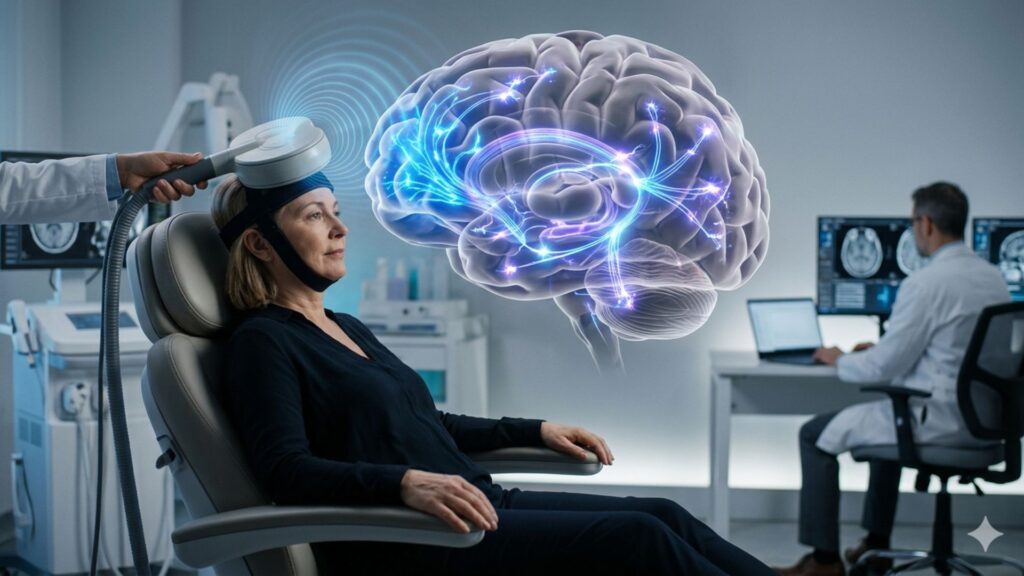

History of TMS (Part 6)
FDA Approvals for TMS Therapy
The regulatory approval of transcranial magnetic stimulation (TMS) by the U.S. Food and Drug Administration (FDA) has been a critical milestone in the widespread adoption of TMS as a recognized medical treatment. The first FDA approval came in 2008 when TMS was cleared for treatment-resistant depression (TRD). Since then, additional approvals have expanded the use of TMS to other conditions, improving patient access and increasing insurance coverage.
Each FDA approval has not only validated TMS as a safe and effective therapy but has also paved the way for continued research, refined treatment protocols, and greater clinical acceptance.
The First FDA Approval: TMS for Depression (2008)
The first major FDA approval for TMS came in 2008, when the agency approved NeuroStar TMS Therapy (developed by Neuronetics) for the treatment of treatment-resistant depression (TRD) in adults.
This approval was based on extensive clinical trials, including a landmark study by O’Reardon et al. (2007), which demonstrated that rTMS was significantly more effective than sham treatment in reducing depressive symptoms (O’Reardon et al., 2007).
Since this initial approval, TMS has become a widely accepted treatment for depression, with continued research exploring its efficacy in different depression subtypes, including bipolar depression, postpartum depression, and adolescent depression.
Expanding the Clinical Use of TMS: Additional FDA Approvals
Following its success in treating depression, TMS received additional FDA approvals for other conditions:
1. FDA Approval for Migraine with Aura (2013)
- In 2013, the FDA approved eNeura’s SpringTMS, a portable, patient-administered TMS device for migraine treatment.
- Research showed that single-pulse TMS delivered at the onset of a migraine aura could reduce headache severity.
- This was the first FDA approval of TMS for a neurological disorder, expanding its use beyond psychiatry.
2. FDA Approval for Deep TMS (dTMS) in OCD (2018)
- In 2018, the FDA approved BrainsWay’s deep TMS (dTMS) system for obsessive-compulsive disorder (OCD), making it the first non-invasive brain stimulation treatment for OCD.
- Unlike standard rTMS, dTMS penetrates deeper brain structures, specifically targeting the anterior cingulate cortex and medial prefrontal cortex, areas known to be hyperactive in OCD.
- Clinical trials showed significant symptom reduction in OCD patients, leading to FDA approval for this specific condition.
These approvals helped establish TMS as an effective treatment for psychiatric and neurological disorders beyond depression.
FDA Clearance for Smoking Cessation (2020)
Unlike the previous conditions, TMS for smoking cessation was FDA cleared rather than approved.
What Does FDA Clearance Mean?
- In 2020, the FDA cleared the use of TMS for smoking cessation, meaning that TMS was found to be substantially equivalent to previously approved neuromodulation devices.
- The 510(k) clearance process allowed TMS to be marketed for smoking cessation based on its similarity to existing brain stimulation technologies.
How TMS Helps with Smoking Cessation
- Targets the dorsolateral prefrontal cortex (DLPFC), an area involved in impulse control and addiction cravings.
- Clinical studies showed that TMS could reduce nicotine cravings and withdrawal symptoms, increasing the likelihood of successful smoking cessation (FDA, 2020).
Key Differences Between FDA Approval and Clearance in TMS
- Depression, migraine, and OCD received full FDA approval, meaning they were tested extensively and determined to be safe and effective for these conditions.
- Smoking cessation received FDA clearance, meaning TMS was recognized as substantially equivalent to other neuromodulation devices but did not require full clinical trial approval.
This distinction is important, as full FDA approval generally requires more extensive clinical evidence, while FDA clearance allows for faster market entry under established regulatory pathways.
How FDA Decisions Have Shaped TMS Research and Accessibility
Each new FDA approval or clearance has had a significant impact on research, clinical practice, and patient accessibility:
- Increased Research Funding
- FDA recognition has led to greater funding for TMS research, expanding its use into new conditions like PTSD, anxiety disorders, and chronic pain.
- Refinement of Treatment Protocols
- FDA approvals have encouraged the development of standardized treatment protocols, ensuring consistent and reliable clinical applications.
- Broader Insurance Coverage and Accessibility
- FDA approvals have helped TMS become more widely covered by insurance, improving patient access.
The regulatory success of TMS has helped it transition from an experimental therapy to a mainstream treatment with expanding clinical applications.
Future FDA Approvals: What’s Next for TMS?
Several new applications are currently under investigation for potential FDA approval:
- TMS for Post-Traumatic Stress Disorder (PTSD)
- Research is exploring whether TMS can modulate emotional regulation circuits in PTSD patients.
- TMS for Generalized Anxiety Disorder (GAD)
- Early trials are examining the effects of low-frequency rTMS on hyperactive brain regions linked to anxiety.
- TMS for Cognitive Decline and Alzheimer’s Disease
- Studies are investigating whether TMS can enhance cognitive function and slow memory decline in neurodegenerative disorders.
These potential FDA approvals could broaden the therapeutic reach of TMS, making it a mainstay treatment for an even wider range of conditions.
Conclusion
The FDA approval of TMS in 2008 for treatment-resistant depression (TRD) was a watershed moment, allowing TMS to move from experimental research to clinical practice. Additional FDA approvals for migraine (2013) and OCD (2018) have further expanded the use of TMS in psychiatry and neurology.
The FDA clearance of TMS for smoking cessation (2020) highlights the growing recognition of TMS in addiction treatment, though it remains distinct from full FDA approval.
With ongoing research and potential future FDA approvals, TMS is expected to continue evolving as a leading non-invasive neuromodulation therapy for a wide range of psychiatric and neurological disorders.
Sources (with Active Links):
- U.S. Food and Drug Administration (FDA). (2008). FDA permits marketing of TMS for treatment of depression. https://www.fda.gov/news-events/press-announcements/fda-permits-marketing-transcranial-magnetic-stimulation-treatment-obsessive-compulsive-disorder
- O’Reardon, J. P., Solvason, H. B., Janicak, P. G., et al. (2007). Multisite randomized controlled trial of TMS for major depression. Biological Psychiatry, 62(11), 1208-1216. https://pubmed.ncbi.nlm.nih.gov/17573044/
- Dunner, D. L., Aaronson, S. T., Carpenter, L. L., et al. (2014). A multisite, naturalistic, observational study of TMS for major depression. The Journal of Clinical Psychiatry, 75(12), 1394-1401.: https://pubmed.ncbi.nlm.nih.gov/25271871/
- FDA. (2020). FDA clears first device for smoking cessation using TMS. https://blogs.the-hospitalist.org/content/fda-clears-first-brain-stimulation-device-help-smokers-quit