
Palmier TMS Podcast Series: What is TMS Part 9
Emerging Interest in TMS Beyond Psychiatry

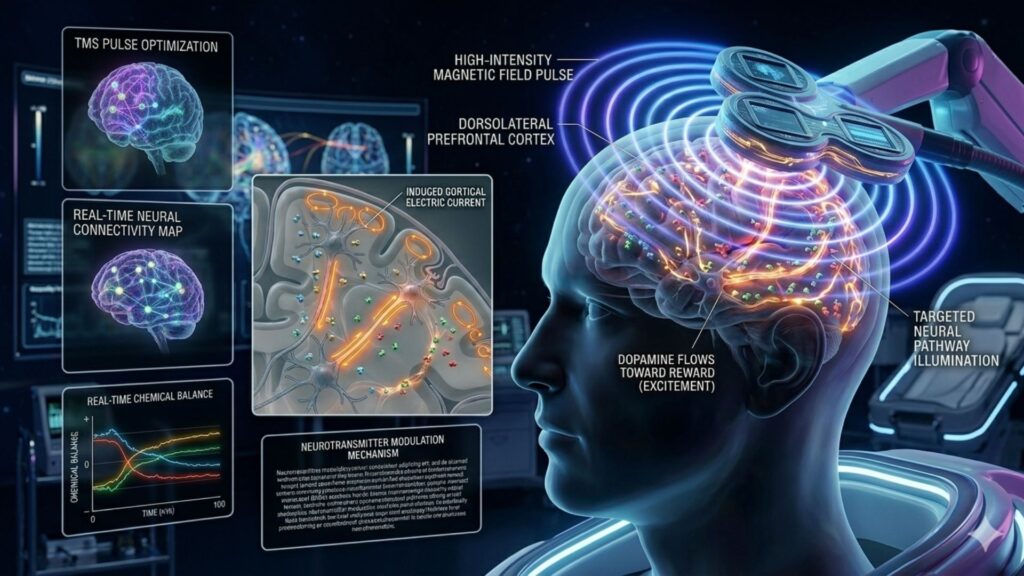
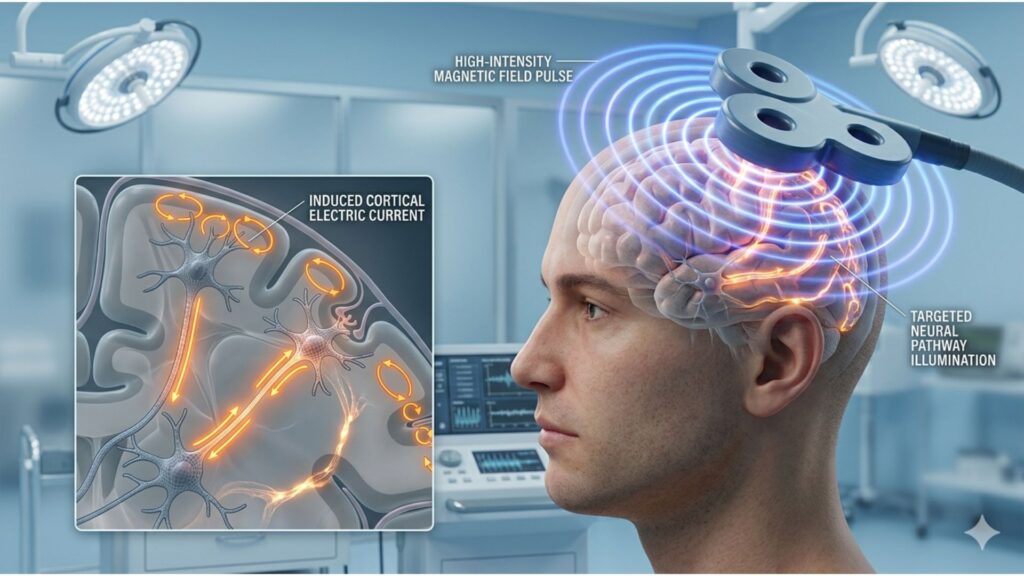
Although Transcranial Magnetic Stimulation (TMS) is primarily recognized for its role in psychiatry, its applications are steadily expanding into other medical fields. The non-invasive nature of TMS, combined with its ability to modulate neural activity with precision, makes it a promising tool for addressing a wide range of neurological and cognitive conditions. As research progresses, TMS is poised to become a transformative tool across multiple medical and scientific disciplines.
TMS in Neurology
TMS has shown considerable potential in the treatment of various neurological disorders, particularly those involving disrupted neural connectivity.
- Parkinson’s Disease: TMS can improve motor function and reduce symptoms such as bradykinesia and rigidity in Parkinson’s patients. By targeting motor cortex regions, TMS helps restore neural pathways that control movement, offering hope for patients seeking non-pharmacological interventions.
- Migraines: TMS has been FDA-approved for the acute treatment of migraines with aura. It works by disrupting cortical spreading depression, a wave of neural activity believed to trigger migraines. Research indicates that TMS reduces both the frequency and intensity of migraine attacks in clinical trials.
- Chronic Pain Syndromes: TMS can modulate pain perception pathways, providing relief for conditions such as fibromyalgia and neuropathic pain. Repetitive TMS over the motor cortex appears to decrease pain sensitivity, likely due to its influence on the brain’s pain modulation networks.
TMS in Stroke Rehabilitation
TMS is gaining recognition as a valuable tool in stroke rehabilitation. Targeting areas of the brain responsible for motor control can enhance neuroplasticity, promoting recovery of movement and coordination. Research indicates that TMS can modulate both the damaged and undamaged hemispheres of the brain, restoring balance in neural activity disrupted by stroke.
- Motor Recovery: TMS can stimulate the affected hemisphere post-stroke, helping to reorganize neural pathways and improve motor outcomes. TMS can also inhibit the overactive activity of the non-affected hemisphere, which often interferes with recovery. Studies have shown that patients receiving repetitive TMS (rTMS) combined with conventional physical therapy demonstrate improved motor function, grip strength, and coordination compared to those undergoing therapy alone. These improvements are believed to result from TMS-induced neuroplastic changes that enhance synaptic efficiency in motor-related brain regions.
- Aphasia Treatment: Beyond motor recovery, TMS is being explored for its role in language rehabilitation. By stimulating language-related brain areas, such as the Broca’s area or the right hemisphere homologous regions, TMS can aid in the recovery of speech and language functions in stroke survivors with aphasia. Clinical trials have shown that low-frequency TMS can improve naming abilities and language fluency, with benefits sustained for several weeks after treatment.
The combination of TMS with traditional rehabilitation techniques holds significant promise, with ongoing research aiming to optimize protocols for maximizing recovery outcomes in stroke patients.
Cognitive Enhancement in Healthy Individuals
Beyond clinical applications, researchers are investigating how TMS can enhance cognitive performance in healthy individuals. The ability of TMS to influence neuroplasticity opens doors to potential applications in educational and workplace settings.
- Memory and Learning: Studies have shown that TMS can improve working memory, attention, and learning speed. By targeting the prefrontal cortex, TMS enhances neural connectivity involved in memory consolidation and retrieval.
- Problem-Solving and Creativity: Emerging research suggests that TMS can foster creative thinking and problem-solving abilities. Stimulating specific brain regions may unlock new cognitive strategies and improve decision-making processes.
- Performance Optimization: There is growing interest in the use of TMS for optimizing cognitive performance in high-stakes environments, such as for athletes, military personnel, and professionals in demanding fields. While still in experimental stages, this area of research reflects the expanding scope of TMS beyond traditional therapeutic uses.
The Future of TMS Across Disciplines
As ongoing studies continue to uncover new opportunities, TMS is positioned to make a significant impact in various fields:
- Neurodegenerative Disorders: TMS is being explored as a potential treatment for Alzheimer’s disease and other forms of dementia, with the goal of slowing cognitive decline and enhancing memory functions. Research suggests that TMS can improve cognitive performance by stimulating regions such as the dorsolateral prefrontal cortex, which is critical for executive function, attention, and working memory. Studies have shown that patients with mild cognitive impairment who received TMS experienced improvements in memory recall and processing speed compared to control groups.
Additionally, repetitive TMS (rTMS) can enhance synaptic plasticity, potentially slowing the progression of neurodegenerative diseases by promoting neural resilience. Clinical trials have reported that TMS may lead to short-term cognitive improvements lasting several weeks to months, with some protocols focusing on daily sessions over multiple weeks to maximize benefits. Ongoing studies aim to determine the long-term effects of TMS on disease progression and its potential role as an adjunct to pharmacological treatments for Alzheimer’s and related disorders.
- Addiction and Cravings: Research is investigating TMS as a tool to reduce cravings and improve self-control in individuals with substance use disorders. TMS targeting the dorsolateral prefrontal cortex can significantly reduce cravings for substances like nicotine and alcohol. Clinical trials reported that participants receiving active TMS sessions experienced a 30-40% reduction in craving intensity compared to control groups. Additionally, TMS can improve inhibitory control, which plays a critical role in preventing relapses among individuals recovering from addiction.
- Psychological Resilience: TMS may play a role in enhancing psychological resilience, potentially serving as a preventive intervention for stress-related disorders.
Conclusion
The versatility of TMS and its ability to influence various aspects of brain health make it a promising tool across medical and scientific disciplines. From neurology and rehabilitation to cognitive enhancement and beyond, TMS continues to push the boundaries of what’s possible in brain modulation. As research advances, the full potential of TMS is likely to unfold, offering innovative solutions for both clinical and non-clinical applications.
Sources:
George, M. S., Lisanby, S. H., Avery, D., McDonald, W. M., Durkalski, V., Pavlicova, M., … & Sackeim, H. A. (2010). Daily left prefrontal transcranial magnetic stimulation therapy for major depressive disorder: a sham-controlled randomized trial. Archives of General Psychiatry, 67(5), 507-516. https://doi.org/10.1001/archgenpsychiatry.2010.46
Hallett, M. (2000). Transcranial magnetic stimulation and the human brain. Nature, 406(6792), 147-150. https://doi.org/10.1038/35018000
Pascual-Leone, A., et al. (2000). Transcranial magnetic stimulation in cognitive neuroscience–virtual lesion, chronometry, and functional connectivity. Current Opinion in Neurobiology, 10(2), 232-237. https://pubmed.ncbi.nlm.nih.gov/10753803/
Valero-Cabré, A., et al. (2017). Impact of repetitive transcranial magnetic stimulation on the functional architecture of the human brain. The Neuroscientist, 23(4), 336-352. https://doi.org/10.1016/j.neubiorev.2017.10.006