
TMS Therapy for Autism Spectrum Disorder: A Promising, Drug-Free Approach to Emotional and Behavioral Balance
Autism Spectrum Disorder (ASD) affects millions of individuals and families across the world. While no two people with autism are the same, many share similar challenges related to emotional regulation, communication, and repetitive behaviors. Traditional therapies—such as behavioral therapy, occupational therapy, and medications—can offer valuable support, yet they don’t always address the neurological root causes of these difficulties.
Enter Transcranial Magnetic Stimulation (TMS)—a cutting-edge, non-invasive, and drug-free treatment that is showing promise in improving emotional balance, cognitive function, and behavioral outcomes for individuals with ASD. At Palmier TMS, we specialize in personalized, evidence-based TMS protocols designed to enhance brain function and support long-term emotional well-being.
In this article, we’ll explore how TMS therapy works, why it’s gaining attention as a supportive treatment for Autism Spectrum Disorder, the scientific evidence behind it, and how families in Missouri can access compassionate care through Palmier TMS.
Understanding Autism Spectrum Disorder (ASD)
Autism Spectrum Disorder (ASD) is a complex neurodevelopmental condition that affects how individuals perceive and interpret the world, process sensory information, and engage in social interactions. The spectrum is broad, meaning the severity and presentation of symptoms vary widely among individuals. Common characteristics include difficulties with verbal and nonverbal communication, challenges in understanding social cues, repetitive behaviors, and highly focused or restricted interests. Sensory sensitivities are also common; some individuals may be extremely sensitive to sounds, lights, or textures, while others may have difficulty adapting to changes in routines or environments.
Despite these challenges, many individuals with ASD demonstrate remarkable strengths, such as exceptional attention to detail, strong memory, analytical thinking, or deep expertise in specific areas of interest. Early intervention and supportive therapies, including speech, occupational, and behavioral therapies, can significantly enhance development, social skills, and independence, helping individuals with ASD reach their full potential and lead fulfilling, meaningful lives.
- Difficulty with social communication
- Repetitive behaviors or restricted interests
- Sensory sensitivities
- Challenges in emotional regulation
- Anxiety or mood fluctuations
ASD is described as a “spectrum” because it manifests differently in each person. Some individuals may require substantial support in daily life, while others live independently and pursue successful careers. What unites them is a unique neurobiological profile—one that may respond positively to neuromodulation techniques like TMS.
Why Traditional Approaches Aren’t Always Enough
Many individuals with ASD benefit from a combination of therapies tailored to their unique needs. These may include behavioral therapy, speech and language therapy, occupational therapy, and social skills training. Some also benefit from sensory integration therapy, educational support, and family counseling to enhance communication, daily functioning, and overall quality of life.
- Applied Behavior Analysis (ABA)
- Speech therapy
- Occupational therapy
- Social skills training
- Medication management for symptoms like anxiety, depression, or irritability
While these interventions are valuable, medication can come with side effects—especially when used long-term or when multiple prescriptions are involved. Moreover, drugs don’t always address brain connectivity issues, which are believed to contribute to many of ASD’s core symptoms.
This is where TMS therapy comes in—a non-invasive, drug-free solution that directly targets brain circuits to promote more balanced neural activity.
What Is TMS Therapy?
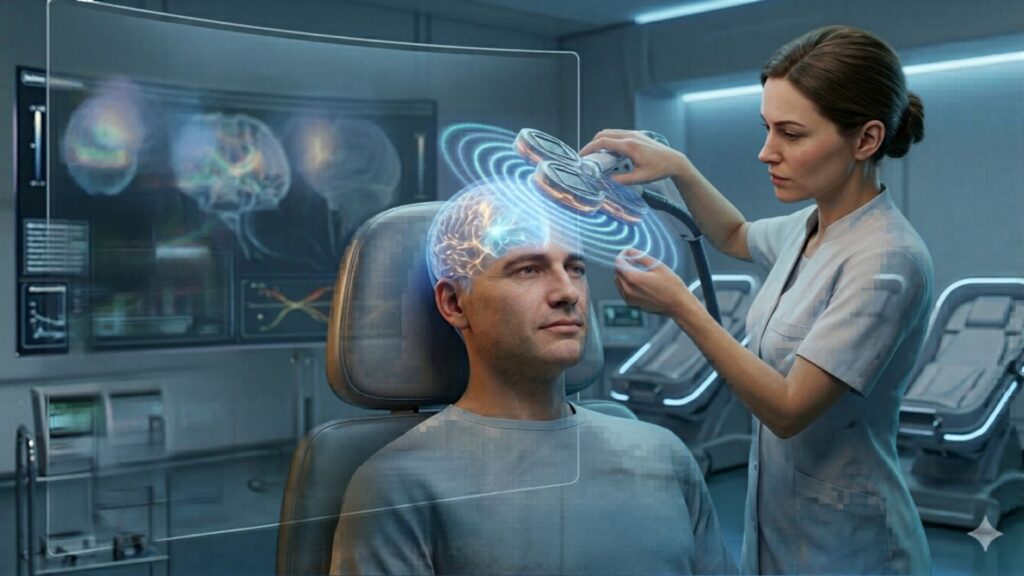
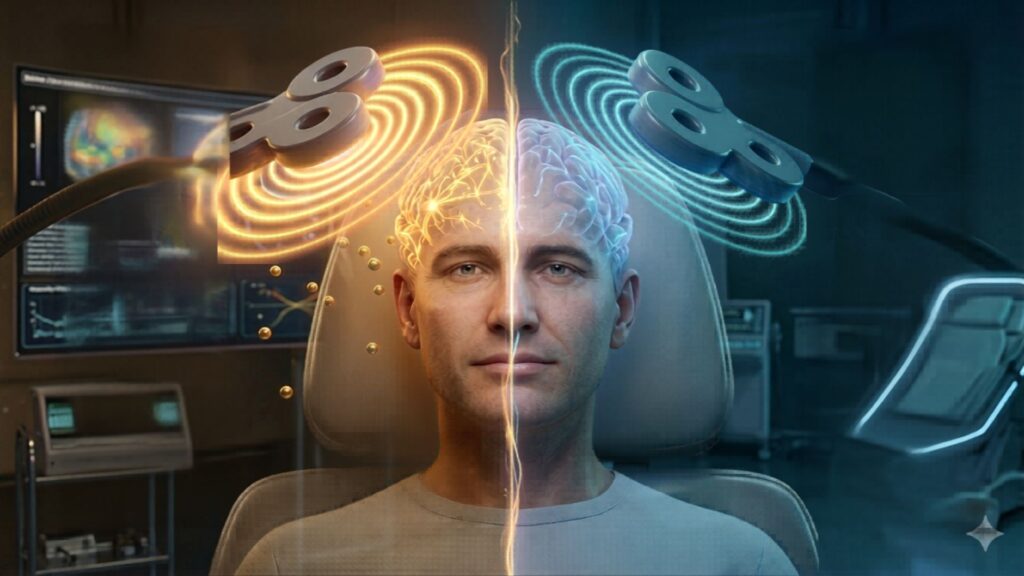
Transcranial Magnetic Stimulation (TMS) is an FDA-approved, non-invasive therapy that uses magnetic fields to stimulate specific regions of the brain. The technology works by delivering gentle magnetic pulses—similar in strength to an MRI—through a specialized coil placed on the scalp.
These pulses activate targeted brain regions associated with mood regulation, attention, and executive function. Over time, TMS can help “retrain” neural networks, leading to improvements in emotional balance, cognitive flexibility, and behavior.
Originally developed for treatment-resistant depression, TMS has been widely adopted in psychiatry for conditions like anxiety, OCD, and PTSD. Today, a growing body of research suggests that it may also benefit individuals with Autism Spectrum Disorder.
How TMS Therapy May Help Individuals with Autism
TMS is not a cure for autism, but studies and clinical experiences suggest it can improve symptoms and quality of life by enhancing brain function and emotional regulation. Here are some potential benefits observed in individuals with ASD:
1. Improved Emotional Regulation
Many people on the autism spectrum experience emotional dysregulation, including irritability, frustration, or anxiety. By stimulating regions like the dorsolateral prefrontal cortex (DLPFC)—a key area for emotion control—TMS can help promote calmer mood responses and reduced reactivity.
2. Enhanced Social Functioning
TMS may improve social cognition—the ability to understand social cues, empathize, and respond appropriately in social situations. Strengthening connectivity between social processing networks can help individuals feel more comfortable in interactions.
3. Reduction in Repetitive Behaviors
Repetitive or stereotyped behaviors are hallmark features of ASD. Some studies have reported a decrease in repetitive movements or compulsive behaviors following TMS, possibly due to enhanced neural communication and impulse control.
4. Better Cognitive Flexibility and Focus
TMS can improve attention and executive functioning, allowing individuals to shift focus more easily, adapt to new routines, and engage more effectively in daily activities or learning environments.
5. Reduced Co-Occurring Symptoms
Many individuals with autism also experience depression, anxiety, or obsessive-compulsive symptoms. Since TMS is FDA-cleared for depression and OCD, it may also alleviate these coexisting conditions, improving overall mental health.
What Does the Science Say?
Although research on transcranial magnetic stimulation (TMS) for autism is still emerging, early findings are promising. Studies suggest TMS may help improve social communication, reduce repetitive behaviors, and enhance brain connectivity in individuals with ASD. However, further research is needed to confirm its long-term safety and effectiveness.
- Harvard Medical School studies have demonstrated that TMS can improve executive function and emotional recognition in individuals with ASD.
- NeuroImage published findings showing enhanced connectivity in prefrontal regions associated with social cognition after TMS sessions.
- Pilot studies report improvements in eye contact, irritability, repetitive behaviors, and adaptive functioning after TMS protocols targeting specific brain regions.
While more large-scale, randomized controlled trials are needed, current data supports the idea that TMS can modulate neural pathways linked to ASD symptoms, offering a safe and non-invasive complement to traditional therapy.
Why Choose TMS as a Drug-Free Option?
For families seeking medication alternatives, TMS offers a powerful, non-chemical solution that targets brain network function directly. By stimulating specific neural pathways, it supports improved emotional regulation, behavior, and cognitive function—all without the systemic side effects often associated with pharmaceuticals, making it a safer, innovative option for individuals with ASD.
Key Advantages of TMS:
- ✅ Non-invasive (no surgery or anesthesia)
- ✅ Drug-free (no risk of dependence or withdrawal)
- ✅ Well-tolerated with minimal side effects (temporary scalp tingling or mild headache)
- ✅ FDA-cleared for depression and OCD
- ✅ Personalized—each treatment plan is tailored to individual brain mapping
What to Expect During TMS Treatment at Palmier TMS
At Palmier TMS, we prioritize personalized, compassionate care. Each individual receives a treatment plan tailored to their unique neurological profile and personal goals, ensuring therapies address specific needs. Our approach combines advanced neuroscience with empathy, helping clients achieve meaningful improvements in emotional regulation, behavior, and overall quality of life.
Step 1: Comprehensive Evaluation
Our clinical team conducts a detailed assessment to understand your or your loved one’s symptoms, history, and goals. We review any previous therapies, medications, and coexisting conditions.
Step 2: Brain Mapping and Protocol Design
We use advanced brain mapping to identify target regions involved in emotional and cognitive regulation. Based on this, we design a customized TMS protocol—including intensity, frequency, and stimulation sites.
Step 3: Treatment Sessions
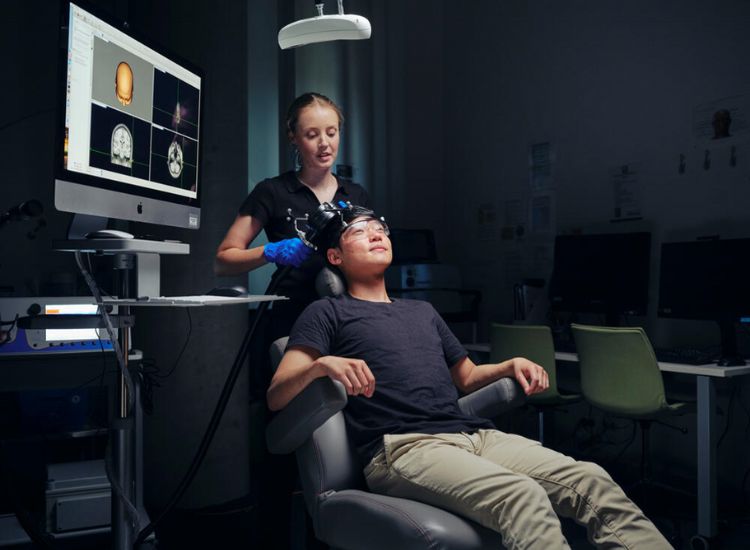
Each session lasts 20–30 minutes. You’ll sit comfortably while gentle magnetic pulses are delivered. There’s no need for sedation—you can read, relax, or listen to music during treatment.
Step 4: Ongoing Monitoring
Throughout the treatment series (typically 4–6 weeks), we monitor progress closely, adjusting protocols as needed to ensure optimal results.
Step 5: Long-Term Support
Our team provides guidance for integrating TMS improvements into daily life, coordinating with therapists or physicians as needed for a comprehensive support plan.
Is TMS Safe for Individuals with Autism?
Yes. TMS is considered safe and well-tolerated, including among individuals with neurodevelopmental conditions. It has been used in both adults and adolescents with minimal side effects. The most common sensations are mild scalp discomfort or a light headache that typically resolves after the first few sessions.
Because TMS does not involve medication, it’s an ideal option for individuals sensitive to pharmaceuticals or those who prefer natural, non-invasive therapies.
Who Is a Good Candidate for TMS?
TMS may be suitable for individuals who experience challenges with emotional regulation, repetitive behaviors, or social communication difficulties associated with Autism Spectrum Disorder. It can also benefit those seeking non-medication treatment options, individuals open to innovative therapies, and those looking to enhance brain function, focus, and overall daily functioning.
- Have Autism Spectrum Disorder and struggle with mood regulation, irritability, or repetitive behaviors
- Experience coexisting depression or anxiety
- Have not responded well to medications or want to avoid drug-based interventions
- Are seeking a safe, evidence-based therapy that complements existing supports
At Palmier TMS, our clinicians will conduct a thorough evaluation to determine if TMS is appropriate for your unique needs.
Real-World Success Stories
Families who have tried TMS often describe meaningful improvements, such as:
“Our son is calmer, more focused, and more engaged in conversation after TMS. He still has autism, but his quality of life has dramatically improved.”
— Parent Testimonial
“TMS helped me feel less anxious and more in control of my emotions. I can focus better in school and enjoy time with my friends.”
— Teen Patient
These experiences highlight how neuromodulation can complement behavioral therapy, enhancing the overall effectiveness of a comprehensive autism care plan.
Frequently Asked Questions (FAQs)
1. Is TMS therapy FDA-approved for autism?
TMS is FDA-approved for depression and OCD. Its use for autism is considered off-label, supported by promising research and clinical results.
2. How long does it take to see results?
Many individuals begin to notice changes in mood, focus, or behavior within 2–4 weeks. Full benefits often appear after completing the full treatment series.
3. Can children or teens receive TMS?
Yes. TMS has been used safely in adolescents. Suitability is determined on a case-by-case basis following a detailed evaluation.
4. Are the effects permanent?
TMS can produce long-lasting changes in brain activity. Some individuals benefit from maintenance sessions to reinforce results.
5. Will insurance cover TMS for autism?
Insurance typically covers TMS for depression and OCD. Coverage for off-label uses like autism varies. Our team can assist with verification and options.
6. Can TMS be combined with other therapies?
Absolutely. TMS works best as part of a comprehensive care plan including behavioral, occupational, or speech therapies.
7. What if my child is sensitive to noise or touch?
TMS is gentle and adjustable. We take care to create a comfortable environment, including sensory-friendly accommodations.
Conclusion
For individuals with Autism Spectrum Disorder (ASD), achieving emotional and behavioral balance can significantly enhance independence, learning, and social connection. Challenges with communication, sensory processing, and repetitive behaviors often make daily life more complex, but emerging therapies offer new avenues for support. Transcranial Magnetic Stimulation (TMS) therapy provides a drug-free, evidence-informed approach to improving brain function, helping children, teens, and adults develop greater focus, emotional regulation, and social engagement. By targeting specific neural pathways, TMS can support the brain’s natural ability to adapt and strengthen connections, empowering individuals to reach their full potential.
At Palmier TMS, we are dedicated to guiding families toward innovative, compassionate solutions. Our expert team carefully tailors each treatment plan to meet the unique needs of every individual. By combining cutting-edge neuroscience with a personalized approach, we help clients navigate challenges, build confidence, and enjoy more fulfilling, independent lives. Your journey toward growth and well-being is our top priority.
Take the Next Step Toward Balance and Well-Being
If you or your loved one are exploring drug-free options for emotional and behavioral support in Autism Spectrum Disorder, Palmier TMS is here to help.
📞 Phone Number (Call or Text): 314-697-4867
🌐 Official Website: https://palmiertms.com
📍 Locations Across Missouri:
- Chesterfield: 112 Chesterfield Commons East Rd, Chesterfield, MO 63005
- Richmond Heights: 1505 S Big Bend Blvd, Richmond Heights, MO 63117
- Osage Beach (Ozarks): 5721 Osage Beach Parkway, Suite #300, Osage Beach, MO 65065
👉 Contact us today to schedule your free consultation and learn how TMS therapy can help restore balance and unlock potential—naturally.