

How TMS Works on the Brain Part 6: Cortical Modulation and Connectivity Changes
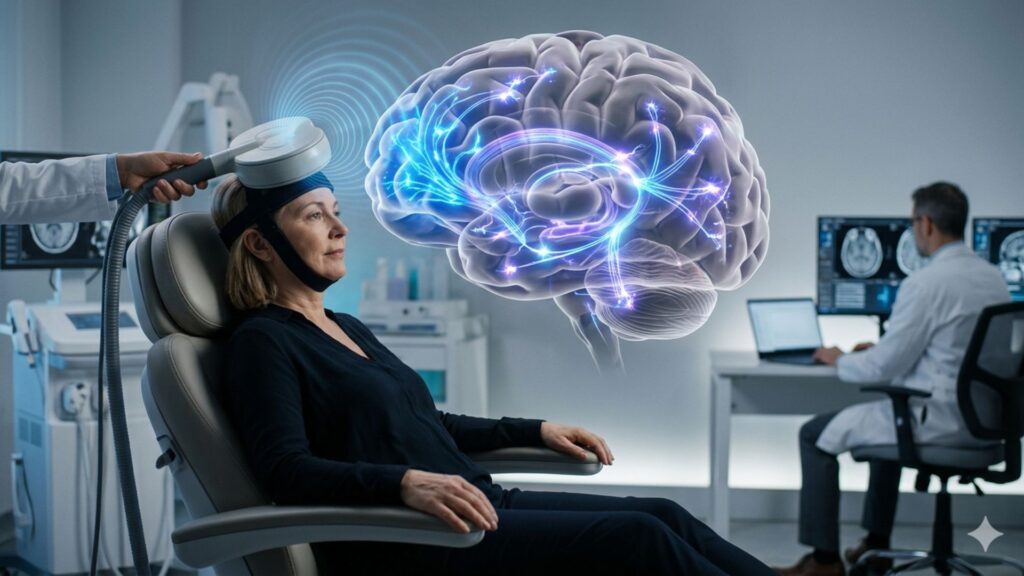
Transcranial magnetic stimulation (TMS) is more than just a tool to excite or inhibit isolated parts of the brain—it’s a gateway to influencing entire networks. One of the most transformative aspects of TMS is its ability to create cortical modulation, meaning it changes how different areas of the brain interact with one another. These connectivity changes, particularly between regions associated with mood, cognition, and motor control, can lead to long-term therapeutic improvements across a wide variety of disorders.
When a TMS pulse is applied to a specific cortical site—say, the dorsolateral prefrontal cortex (DLPFC)—the effects don’t stop there. The stimulation initiates a cascade of activity through connected neural circuits, many of which extend deep into the brain. This means that even though TMS is non-invasive and superficial in its direct contact, its effects are anything but shallow.
How TMS Alters Brain Connectivity
The brain operates as a network, with different regions communicating constantly through electrical and chemical signals. Disruptions in these patterns—whether due to depression, anxiety, or neurodegenerative diseases—can lead to symptoms such as rumination, emotional dysregulation, and cognitive fog. TMS helps to restore balance to these disrupted networks.
By modulating the excitability of a specific cortical area, TMS influences how that area communicates with others. For instance, in depression, the left DLPFC often has reduced connectivity with the subgenual anterior cingulate cortex (sgACC), a region tied to emotion and self-reflection. High-frequency TMS to the left DLPFC strengthens this connection, which correlates with symptom relief. In essence, TMS “re-tunes” the brain’s circuits, promoting healthier communication between its hubs.
Resting-state functional MRI (rs-fMRI) and EEG studies show that after a course of TMS, there are measurable changes in brain network activity. This includes increased synchrony within the default mode network (DMN), salience network, and executive control network—all of which play roles in self-awareness, focus, and emotional processing.
Long-Term Plasticity Through Repeated Stimulation
While a single TMS session may produce short-lived changes, repeated sessions can lead to lasting neural reorganization. This is due to mechanisms like long-term potentiation (LTP) and long-term depression (LTD)—the same cellular processes involved in learning and memory.
As certain pathways are strengthened or inhibited over time, the brain adapts, forming new patterns of connectivity. These neuroplastic effects are why TMS remains effective even after treatment has stopped, especially in combination with therapy or lifestyle changes. It’s not just a temporary fix; it’s a catalyst for long-term rewiring.
Targeting the Right Networks
Connectivity-based TMS is now an area of growing research and clinical interest. Rather than only focusing on anatomical landmarks, clinicians are starting to tailor protocols based on each person’s functional brain networks. Using imaging tools like rs-fMRI or EEG, practitioners can identify which areas are overconnected or underconnected and adjust stimulation accordingly.
This personalized approach has shown promise in treatment-resistant depression, PTSD, OCD, and even cognitive decline. In one study, participants whose TMS targets were selected based on strong functional connectivity with the sgACC experienced greater clinical improvements than those treated using traditional scalp measurements. This underscores the importance of considering not just where the stimulation occurs, but how that region fits into the brain’s broader communication system.
Clinical Implications Across Disorders
- Depression: Improved DLPFC-sgACC connectivity is linked with reduced rumination and better mood regulation.
- Anxiety: Modulation of the prefrontal-amygdala circuit helps dampen excessive fear responses.
- PTSD: Enhanced connectivity within the salience network may support emotional processing and memory integration.
- OCD: TMS targeting the SMA and orbitofrontal cortex can normalize hyperconnectivity responsible for intrusive thoughts and compulsions.
Even in conditions like Alzheimer’s disease, early studies suggest that enhancing connectivity within memory-related networks may slow cognitive decline.
A Future Guided by Networks
Cortical modulation and connectivity changes offer a window into the future of TMS—one where treatments are not only more effective but also more precise. Instead of using the same protocol for everyone, clinicians can fine-tune treatments based on how a patient’s brain functions. As tools like real-time EEG feedback, connectome mapping, and AI-assisted targeting advance, the potential for personalized neuromodulation will only continue to grow.
TMS is no longer just about where you stimulate, but how that stimulation reshapes the larger conversation happening inside the brain. The result? A deeper, more durable impact on the circuits that govern thought, mood, and behavior.
References
- Fox, M. D., Liu, H., & Pascual-Leone, A. (2013). Identification of reproducible individualized targets for treatment of depression with TMS based on intrinsic connectivity. NeuroImage, 66, 151–160. https://doi.org/10.1016/j.neuroimage.2012.10.082
- Cash, R. F. H., Zalesky, A., Thomson, R. H., Tian, Y., Cocchi, L., & Fitzgerald, P. B. (2019). Subgenual functional connectivity predicts antidepressant treatment response to TMS. Neuropsychopharmacology, 44(7), 1233–1241. https://pubmed.ncbi.nlm.nih.gov/30670304/
- Drysdale, A. T., Grosenick, L., Downar, J., et al. (2017). Resting-state connectivity biomarkers define neurophysiological subtypes of depression. Nature Medicine, 23(1), 28–38. https://doi.org/10.1038/nm.4246
- Beynel, L., Powers, J. P., & Appelbaum, L. G. (2020). Effects of repetitive transcranial magnetic stimulation on resting-state connectivity: A systematic review. NeuroImage, 211, 116596. https://doi.org/10.1016/j.neuroimage.2020.116596