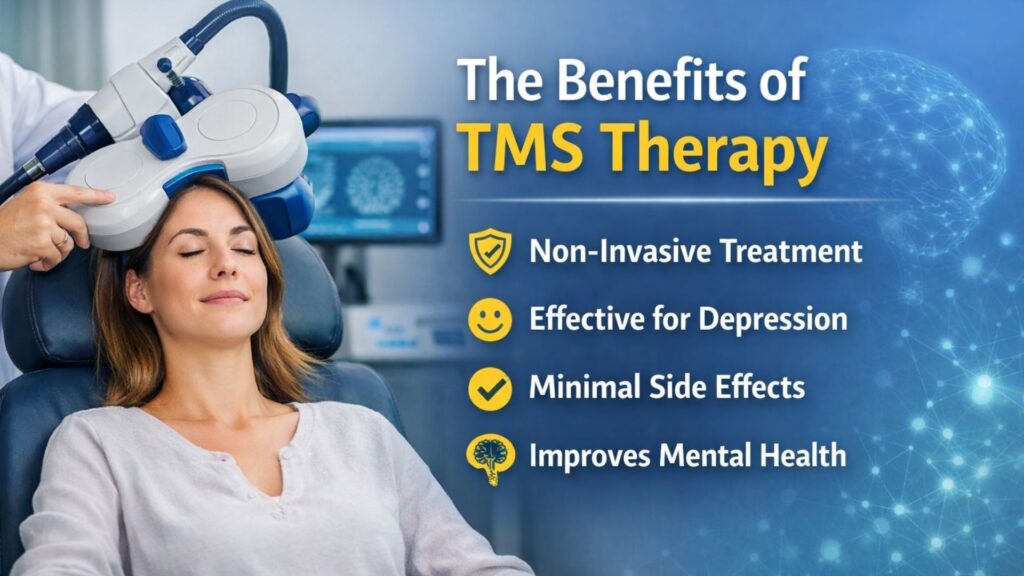

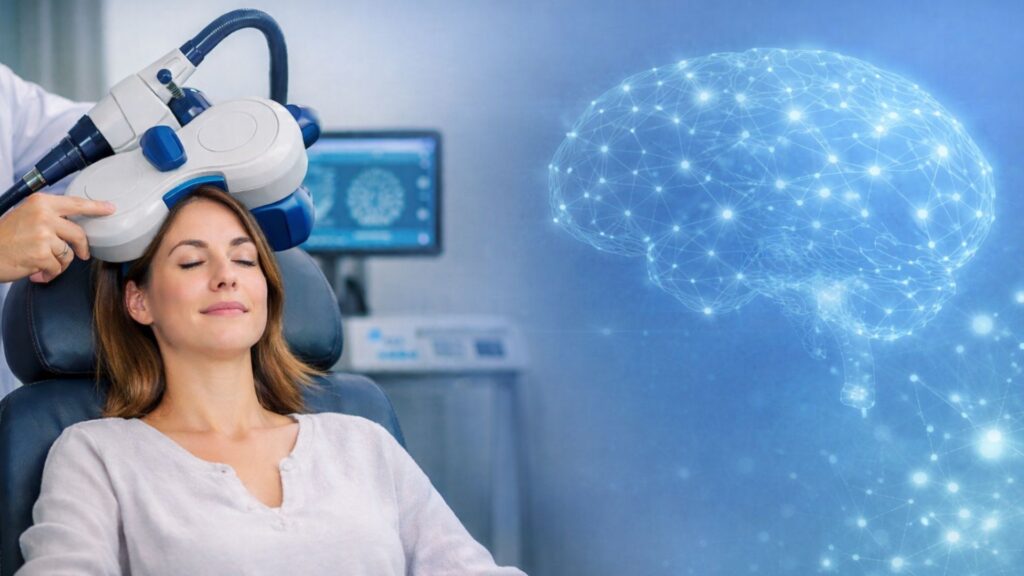
Transcranial Magnetic Stimulation (TMS) is a revolutionary, non-invasive therapy that uses magnetic pulses to stimulate nerve cells in the brain. Initially developed and FDA-cleared for treatment-resistant depression, TMS has rapidly become an important option for individuals seeking effective, drug-free solutions to mental health challenges.
Unlike traditional medications, which affect the entire body, TMS targets specific brain regions responsible for mood and emotional regulation. This precision makes it a powerful tool for improving overall mental wellness with minimal side effects.
How TMS Therapy Works
TMS therapy uses a magnetic coil placed near the scalp to generate focused magnetic pulses. These pulses stimulate neurons in areas of the brain linked to mood, cognition, and emotional control.
Key Features of TMS Therapy
- Non-invasive: No surgery, anesthesia, or incisions required.
- Targeted treatment: Directly stimulates the prefrontal cortex, the region most associated with mood regulation.
- Evidence-based: Backed by multiple clinical studies showing effectiveness for depression and other mental health disorders.
- Customizable: Treatment intensity and session duration can be tailored to each patient’s needs.
Proven Benefits of TMS Therapy
1. Effective Treatment for Depression
Research shows that TMS can significantly reduce depressive symptoms, especially in patients who haven’t responded to medications. Studies indicate that 40–60% of patients with treatment-resistant depression experience meaningful improvement, and about 30–40% achieve full remission.
2. Non-Invasive and Drug-Free Approach
TMS provides a non-pharmacological alternative to antidepressants. For patients experiencing medication side effects or those who prefer drug-free options, TMS offers a safe and effective treatment.
3. Reduces Anxiety and Stress
By targeting the prefrontal cortex, TMS helps regulate the brain circuits involved in anxiety and stress response. Patients often report reduced anxiety, improved emotional stability, and better stress management.
4. Minimal Side Effects
The most common side effects of TMS are mild scalp tingling or temporary headaches. Unlike medications, TMS does not carry risks of weight gain, drowsiness, or systemic side effects.
5. Enhances Cognitive Function
Emerging research shows TMS can improve attention, focus, and executive functioning in some patients, helping with work productivity, memory, and daily cognitive tasks.
6. Improves Overall Quality of Life
By reducing depressive symptoms and enhancing mood, TMS often leads to better relationships, increased motivation, and overall life satisfaction.
Conditions TMS Therapy Can Address
TMS is FDA-cleared for depression but has also shown promise for other mental health conditions:
- Major Depressive Disorder (MDD)
- Treatment-resistant depression
- Generalized anxiety disorder
- Obsessive-compulsive disorder (OCD)
- Postpartum depression (as supported by recent clinical studies)
What to Expect During TMS Treatment
A typical TMS treatment plan involves:
- Initial assessment: A mental health professional evaluates your suitability for TMS.
- Treatment sessions: Sessions usually last 20–40 minutes, administered 5 days per week for 4–6 weeks.
- Monitoring progress: Patients are regularly assessed for symptom improvement and any side effects.
Most patients notice improvements after 2–4 weeks, though optimal results often require completing the full treatment course.
Patient Experiences and Testimonials
Many patients report life-changing results after TMS therapy. Common feedback includes:
- “I feel more motivated and less anxious.”
- “For the first time in years, I can enjoy daily life without feeling weighed down by depression.”
- “TMS gave me hope when medications weren’t working.”
Frequently Asked Questions (FAQs)
Q1: Is TMS therapy safe?
Yes. TMS is FDA-cleared, non-invasive, and generally well-tolerated. Most side effects are mild and temporary.
Q2: How many sessions are needed?
Typically, 20–30 sessions over 4–6 weeks, though this varies depending on individual response.
Q3: Can TMS be combined with other treatments?
Yes. TMS can complement medications, therapy, and lifestyle interventions for improved outcomes.
Q4: Is TMS painful?
Most patients feel only mild tapping or tingling on the scalp. No anesthesia is needed.
Q5: Can TMS help with conditions other than depression?
Emerging research suggests benefits for anxiety, OCD, and postpartum depression, with ongoing studies exploring other applications.
Conclusion
Transcranial Magnetic Stimulation (TMS) therapy represents a breakthrough in mental health care. Its targeted, non-invasive approach, minimal side effects, and proven effectiveness make it a highly promising option for individuals struggling with depression and other mental health challenges. By restoring neural balance and improving mood regulation, TMS offers hope, empowerment, and lasting mental wellness.