
How TMS Works on the Brain Part 3: Neurotransmitter Regulation via TMS
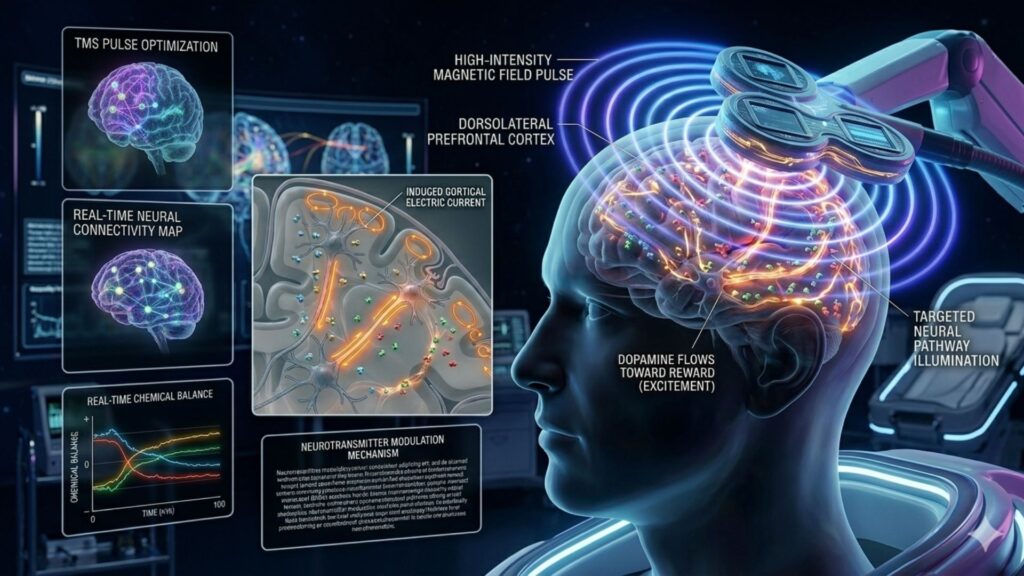
One of the most significant effects of transcranial magnetic stimulation (TMS) is its ability to influence the levels and activity of neurotransmitters—the chemical messengers of the brain. By stimulating specific brain regions, TMS alters the balance and function of neurotransmitters like serotonin, dopamine, norepinephrine, GABA, and glutamate, all of which are crucial to emotional regulation, cognitive performance, and overall mental health.
This section explores how TMS impacts these neurotransmitter systems, and how this modulation contributes to symptom relief in psychiatric and neurological disorders.
How TMS Affects Neurotransmission
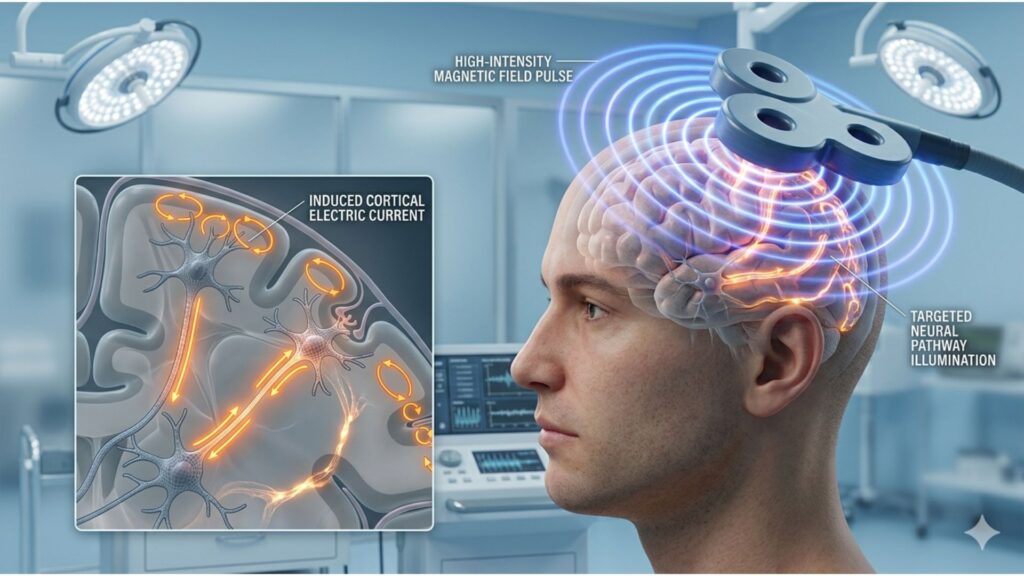
TMS-induced electrical currents activate neural circuits that trigger downstream effects on neurochemical pathways. When the magnetic field stimulates a target region such as the dorsolateral prefrontal cortex (DLPFC), this area communicates with deeper brain structures via established neural networks. These interactions influence neurotransmitter production and release, modulating brain chemistry in both localized and widespread ways.
Studies using positron emission tomography (PET), magnetic resonance spectroscopy (MRS), and cerebrospinal fluid (CSF) analysis have confirmed that TMS:
- Increases dopamine release in the striatum, a region tied to reward and motivation.
- Enhances serotonin availability, which plays a key role in mood and anxiety regulation.
- Modulates glutamate and GABA levels, balancing excitatory and inhibitory activity in the brain.
These effects are not just acute. With repeated stimulation, TMS promotes neuroplastic changes that support long-term regulation of neurotransmitter systems.
Serotonin: Regulating Mood and Anxiety
Serotonin (5-HT) is one of the most widely studied neurotransmitters in depression and anxiety disorders. Selective serotonin reuptake inhibitors (SSRIs) have long been used to increase serotonin levels in the brain. TMS offers a non-pharmacological method of achieving a similar result.
High-frequency TMS to the left DLPFC has been shown to enhance serotonergic transmission, particularly in the limbic system. The increase in serotonin availability is thought to improve emotional resilience and reduce anxiety, which is why TMS is so effective in patients who are resistant to SSRIs or intolerant to their side effects.
Dopamine: Boosting Motivation and Reward
Dopamine is central to motivation, focus, and the brain’s reward system. In conditions like major depressive disorder and Parkinson’s disease, dopamine levels are often abnormally low.
Research has shown that TMS increases dopamine release in the caudate nucleus and putamen—areas tied to goal-directed behavior and pleasure. This explains the reported improvement in motivation, energy, and outlook among patients undergoing TMS therapy for depression. The dopamine boost may also contribute to emerging research on TMS for addiction and substance use disorders, where the reward circuitry is often dysregulated.
Glutamate and GABA: Balancing Brain Excitability
Glutamate is the brain’s primary excitatory neurotransmitter, while GABA (gamma-aminobutyric acid) is the primary inhibitory neurotransmitter. Mental health conditions often involve imbalances between these two systems.
TMS appears to modulate glutamatergic activity in regions such as the prefrontal cortex and hippocampus, enhancing cognitive function and learning. At the same time, it increases GABAergic tone, which calms overactive circuits and contributes to emotional regulation.
In depression and anxiety, this rebalancing effect may explain how TMS reduces symptoms without the need for chemical medications. It is also relevant in disorders like PTSD, OCD, and bipolar disorder, where cortical excitability is often disrupted.
Norepinephrine: Enhancing Attention and Arousal
Although less studied than other neurotransmitters, TMS also impacts norepinephrine (NE)—a neurotransmitter involved in attention, arousal, and stress response.
Stimulation of the prefrontal cortex has been linked to enhanced NE transmission, which may explain improved concentration and cognitive control observed in some patients. This mechanism is being explored in the use of TMS for ADHD and cognitive fatigue following brain injuries or chemotherapy.
Lasting Neurochemical Changes and Plasticity
Unlike medications that must be taken daily, TMS can create sustained changes in neurotransmitter function. Repeated stimulation fosters long-term potentiation (LTP) and long-term depression (LTD)—cellular mechanisms that regulate synaptic strength and neural communication.
Over time, this neurochemical remodeling supports greater emotional stability, improved stress resilience, and better cognitive processing. These effects may continue weeks or months after the last TMS session, especially when paired with other therapies like CBT or lifestyle changes such as exercise and sleep optimization.
Clinical Implications
Understanding TMS’s effects on neurotransmitters helps explain its therapeutic impact across a range of disorders:
- Depression: Restoration of serotonin, dopamine, and glutamate balance improves mood and motivation.
- Anxiety: Increases in GABA and serotonin reduce hyperarousal and worry.
- PTSD and OCD: Modulation of glutamate and GABA reduces intrusive thoughts and emotional reactivity.
- Addiction: Dopamine regulation may curb cravings and reward-seeking behavior.
These insights are pushing researchers toward more personalized TMS protocols, where stimulation parameters are tailored based on individual neurochemistry and brain imaging data.
Conclusion
Transcranial magnetic stimulation influences neurotransmitter systems in powerful ways, helping restore chemical balance in the brain. Through targeted, non-invasive stimulation, TMS enhances mood, motivation, cognition, and emotional regulation without the systemic side effects of medications. As our understanding of its neurochemical mechanisms continues to grow, TMS is becoming a cornerstone of modern psychiatry and neurology.
References
- Davidson, Benjamin, Bhattacharya, Amitabh et al. (2024). Neuromodulation techniques- From non-invasive brain stimulation to deep brain stimulation. Neurotherapeutics, 21(3). https://www.sciencedirect.com/science/article/pii/S1878747924000163
- Baeken, C., Marinazzo, D., Everaert, H., Wu, G. R., Van Hove, C., Audenaert, K., Goethals, I., De Vos, F., Peremans, K., & De Raedt, R. (2015). The Impact of Accelerated HF-rTMS on the Subgenual Anterior Cingulate Cortex in Refractory Unipolar Major Depression: Insights From 18FDG PET Brain Imaging. Brain stimulation, 8(4), 808–815. https://doi.org/10.1016/j.brs.2015.01.415
- Godfrey, K. E. M., Muthukumaraswamy, S. D., Stinear, C. M., & Hoeh, N. (2021). Effect of rTMS on GABA and glutamate levels in treatment-resistant depression: An MR spectroscopy study. Psychiatry research. Neuroimaging, 317, 111377. https://doi.org/10.1016/j.pscychresns.2021.111377
- Noda, Y., Zomorrodi, R., Saeki, T., Rajji, T. K., Blumberger, D. M., Daskalakis, Z. J., & Nakamura, M. (2017). Resting-state EEG gamma power and theta-gamma coupling enhancement following high-frequency left dorsolateral prefrontal rTMS in patients with depression. Clinical neurophysiology : official journal of the International Federation of Clinical Neurophysiology, 128(3), 424–432. https://doi.org/10.1016/j.clinph.2016.12.023