
How TMS Therapy Works: A Safe, Non‑Invasive Treatment for Depression & OCD

For individuals suffering from depression or obsessive-compulsive disorder (OCD), traditional treatments like medication and therapy don’t always provide lasting relief. Enter Transcranial Magnetic Stimulation (TMS)—a science-backed, FDA-approved, non-invasive treatment that targets the brain directly without drugs or surgery. At Palmier TMS & Behavioral Health, we offer a personalized, comfortable approach to mental wellness using cutting-edge TMS technologies. This article explores how TMS works, why it’s effective for depression and OCD, what the treatment experience is like, and why Palmier TMS stands out as your trusted partner in mental health.
What Exactly Is TMS?
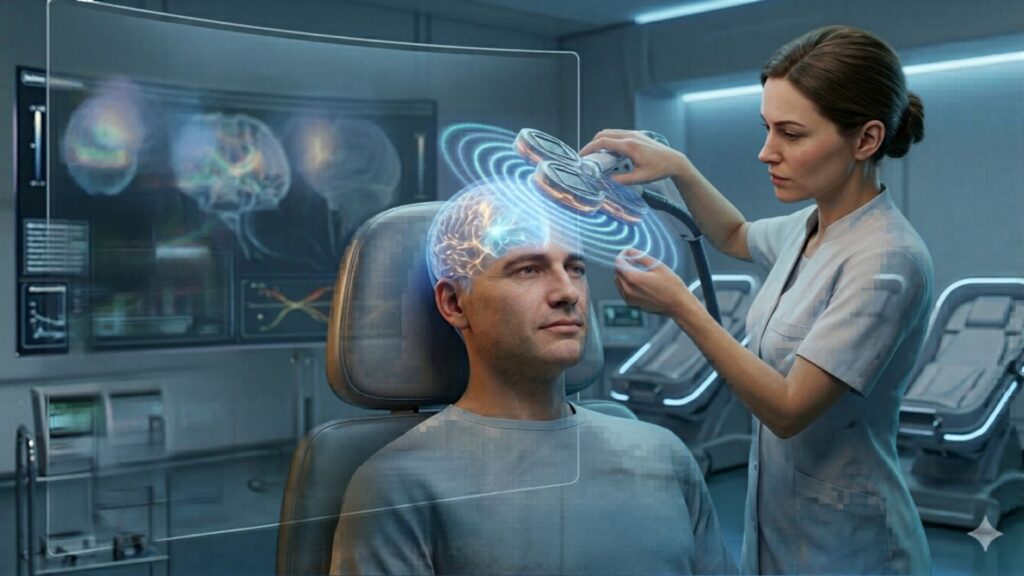
Transcranial Magnetic Stimulation, or TMS, is a non-invasive neurostimulation therapy that uses magnetic pulses to stimulate nerve cells in specific brain regions associated with mood regulation. An electromagnetic coil placed against the scalp generates brief magnetic fields—similar in strength to MRI machines—that pass through bone and tissue to induce electrical currents in the brain.
TMS is FDA-approved for:
- Major Depressive Disorder (MDD): Particularly when patients don’t fully respond to medications or talk therapy.
- Obsessive-Compulsive Disorder (OCD): Deep TMS (dTMS) has shown significant symptom reduction in clinical trials.
It may also benefit conditions like anxiety, PTSD, postpartum depression, bipolar disorder, autism spectrum disorder, post-concussion syndrome, and even smoking cessation.
How TMS Works: A Deeper Dive
a. Stimulating the Brain Non-Invasively
Transcranial Magnetic Stimulation (TMS) is a non-invasive treatment that uses focused magnetic pulses to stimulate specific regions of the brain. Here’s what a typical TMS session looks like:
- You sit comfortably in a reclining chair.
- A magnetic coil is positioned against your scalp, usually targeting the left dorsolateral prefrontal cortex (DLPFC)—an area commonly underactive in people with depression.
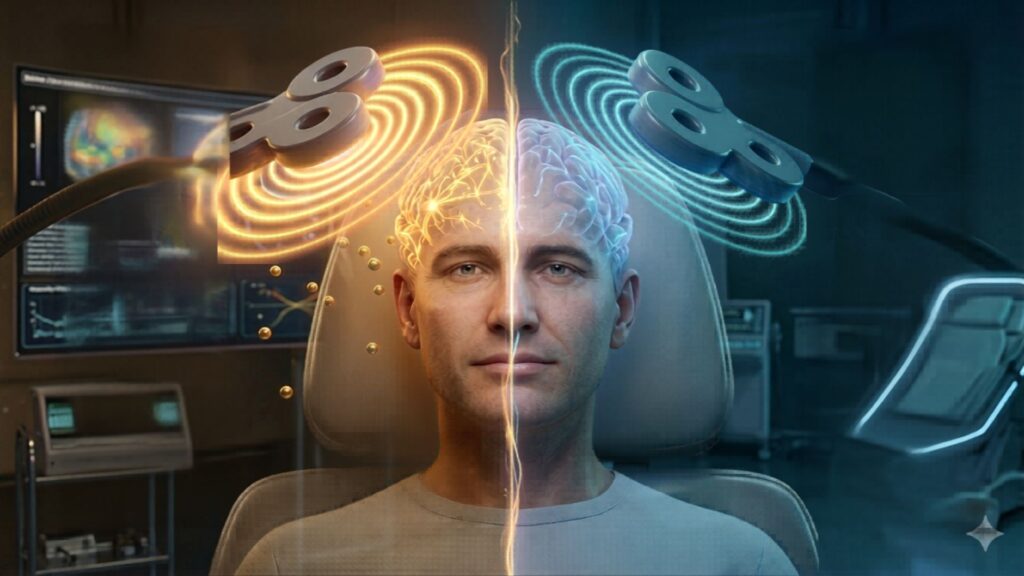
- The device emits brief, repetitive magnetic pulses that generate tiny electrical currents, which help modulate brain activity.
What You’ll Experience:
- A tapping sensation on the scalp and clicking sounds from the machine.
- No pain, sedation, or systemic side effects.
- You remain fully awake and can resume normal activities immediately after each session.
b. How TMS Affects Depression
Depression is often linked to reduced activity in the DLPFC and disruptions in neurotransmitters such as serotonin, dopamine, and norepinephrine.
TMS works by:
- Directly stimulating the DLPFC.
- Enhancing neuronal firing and connectivity.
- Encouraging the release of mood-regulating neurotransmitters.
Clinical results:
- 50–60% of patients show significant symptom improvement.
- 30–35% achieve full remission after a treatment course.
c. How TMS Helps OCD
Obsessive-Compulsive Disorder (OCD) involves excessive activity in neural circuits involving the anterior cingulate cortex (ACC) and medial prefrontal cortex (mPFC).
Deep TMS (dTMS), which uses advanced H-coils (e.g., BrainsWay’s H7 coil), reaches these deeper regions more effectively than standard coils.
What the studies show:
- Up to 39% reduction in OCD symptoms after just 10 sessions.
- About 60% of patients maintain symptom improvement a year later.
Safety & Tolerability: TMS Benefits
TMS has an outstanding safety record, making it an attractive option for many patients:
- Mild and temporary side effects such as scalp discomfort or headaches.
- No systemic side effects like those seen with medications (e.g., weight gain, sexual dysfunction, drowsiness).
- Serious risks are extremely rare—seizures occur in less than 0.1% of cases, typically only if safety protocols are not followed.
- No sedation or downtime—patients are alert and can drive themselves home afterward.
TMS vs. Other Treatments
TMS stands out as a powerful alternative to traditional treatments for depression and OCD, particularly when compared to medications, psychotherapy, and electroconvulsive therapy (ECT). Unlike antidepressants, which often come with side effects such as fatigue, sexual dysfunction, or weight gain, TMS provides a drug-free option with minimal side effects. While talk therapy is effective in addressing emotional and cognitive patterns, TMS directly targets the brain’s neural circuitry, and combining the two approaches often yields the best results. Compared to ECT, which is typically reserved for severe, treatment-resistant cases and involves anesthesia and cognitive side effects, TMS is non-invasive, requires no sedation, and allows patients to resume daily activities immediately after each session. This makes TMS an appealing and safe option for individuals seeking effective, well-tolerated, and evidence-based care for mood disorders.
What to Expect During TMS Treatment
Your journey with Transcranial Magnetic Stimulation (TMS) at Palmier TMS & Behavioral Health begins with a comprehensive consultation and evaluation. During this initial appointment, our clinical team will carefully review your medical and psychiatric history, conduct a neuropsychological assessment, and determine whether you’re a suitable candidate for TMS therapy. Patients with certain contraindications—such as a history of seizures or the presence of metal implants near the head—may require alternative treatment plans. The good news is that most major insurance providers, including Medicare, offer coverage for FDA-approved TMS treatments for depression and OCD, making access to this transformative therapy more attainable for many individuals.
Once you’re approved for treatment, the TMS therapy protocols are customized based on your diagnosis and symptoms. For depression, repetitive TMS (rTMS) protocols typically involve daily sessions of 20–40 minutes, five days a week, for 4 to 6 weeks. For patients with Obsessive-Compulsive Disorder (OCD), Deep TMS (dTMS) uses specialized H-coils to reach deeper brain structures, following a similar treatment schedule. Another variant known as Intermittent Theta Burst Stimulation (iTBS) delivers a shorter treatment session—lasting between 3 to 10 minutes—but is still under clinical study to evaluate long-term efficacy. During the actual treatment, you’ll sit comfortably in a chair while the TMS coil is positioned gently on your scalp. You’ll hear a rhythmic clicking noise and feel a tapping sensation as the magnetic pulses are delivered. The procedure is non-invasive and pain-free; many patients bring a book, use their phones, or simply relax during the session.
Immediately after each TMS session, you’ll be able to return to your normal daily activities, including driving, working, or socializing. There is no need for sedation or recovery time. While some patients may experience mild side effects—such as scalp tenderness or a slight headache—these effects are usually brief and resolve on their own. The vast majority of patients tolerate the treatment well and report no significant discomfort.
Over time, the results become more noticeable. Most patients begin experiencing symptom improvement within 2 to 4 weeks of consistent treatment, although individual responses may vary. Full benefits typically emerge by the end of the treatment cycle, especially when the patient adheres to the recommended schedule. The cumulative effect of regular stimulation helps the brain “retrain” its neural activity, leading to sustained symptom relief. For many patients, the positive results of TMS last for several months to even years, and booster sessions may be scheduled if symptoms return. Overall, TMS is a safe, clinically proven, and non-invasive option for those who have not found success with medications or traditional therapies.
Evidence Supporting TMS Effectiveness
Transcranial Magnetic Stimulation (TMS) is not only a promising alternative to conventional psychiatric treatments but is also strongly supported by extensive scientific research and clinical trials. Its effectiveness has been demonstrated across numerous studies for both Major Depressive Disorder (MDD) and Obsessive-Compulsive Disorder (OCD), establishing TMS as a reliable, evidence-based intervention.
TMS for Depression
TMS received FDA approval in 2008 for the treatment of Major Depressive Disorder, particularly in patients who have not responded adequately to one or more antidepressant medications. Since then, its clinical use has expanded significantly, backed by growing empirical evidence. Meta-analyses—studies that aggregate results from multiple clinical trials—consistently report response rates of 50% to 60%, meaning that about half of all patients experience a substantial improvement in their symptoms. Even more impressively, 30% to 35% of patients achieve full remission, effectively eliminating major depressive symptoms and restoring functional well-being.
These outcomes are further enhanced by advancements in treatment precision. Modern TMS protocols now utilize higher-intensity stimulation, tailored coil placement based on functional neuroimaging or anatomical landmarks, and individualized treatment schedules. These innovations allow clinicians to fine-tune therapy to a patient’s unique brain physiology, optimizing results and improving long-term outcomes. Additionally, newer protocols such as intermittent Theta Burst Stimulation (iTBS) offer shorter session times with comparable efficacy, making treatment more convenient while maintaining strong clinical benefits.
TMS for OCD
In 2018, the FDA approved Deep TMS (dTMS) for the treatment of Obsessive-Compulsive Disorder (OCD), marking a major milestone in non-invasive psychiatric care. Unlike standard rTMS, which targets more superficial brain areas, dTMS uses specialized H-coils capable of stimulating deeper regions of the brain involved in OCD pathology, such as the anterior cingulate cortex (ACC) and medial prefrontal cortex (mPFC). These regions are hyperactive in individuals with OCD, leading to repetitive, intrusive thoughts and compulsive behaviors.
Clinical studies show that patients undergoing dTMS for OCD can experience up to a 39% reduction in symptoms after just 10 sessions, with many individuals maintaining their improvements for a year or more. In a significant meta-analysis comparing real TMS to sham (placebo) stimulation, rTMS demonstrated a moderate effect size (g = 0.65), indicating meaningful clinical benefit. Patients receiving active TMS treatment were found to be three times more likely to respond than those receiving sham treatment. This underscores TMS’s ability to provide real, measurable improvements for a condition that is notoriously difficult to treat with medication alone.
Together, these findings paint a compelling picture: TMS is not a fringe therapy—it is a well-researched, FDA-cleared modality that offers substantial relief for patients struggling with depression and OCD, especially those who have exhausted traditional treatment options. With its growing body of scientific support, minimal side effects, and lasting benefits, TMS represents a transformative breakthrough in mental health care.
Why Choose Palmier TMS?
Choosing the right provider for mental health care is a deeply personal decision, and at Palmier TMS & Behavioral Health, we pride ourselves on delivering a level of compassionate, personalized service that sets us apart. Our patient-centered approach is at the heart of everything we do. We don’t believe in one-size-fits-all treatment. Instead, we specialize in customized care plans that address a wide spectrum of conditions, including major depression, OCD, anxiety disorders, PTSD, autism spectrum challenges, and concussion-related symptoms. Every patient receives a unique protocol tailored to their diagnosis, history, and neurological profile.
Our team also brings deep expertise in advanced TMS technologies, offering both repetitive TMS (rTMS) and deep TMS (dTMS) using FDA-cleared devices, such as BrainsWay’s H-coil for OCD. Treatments are administered by highly trained clinicians in a warm, professional, and judgment-free environment, ensuring that patients feel comfortable and supported every step of the way.
Navigating mental health care and insurance can be overwhelming, which is why Palmier TMS provides full insurance support. Most major insurance plans, including Medicare and Medicaid, offer coverage for FDA-approved TMS therapy when clinical criteria are met. Our administrative team works closely with each patient to handle pre-authorizations, benefits verification, and billing, simplifying the process so you can focus on your healing.
Finally, flexibility is built into our care model. TMS treatments are outpatient procedures, meaning there’s no downtime, sedation, or disruption to your daily life. Most sessions last between 3 and 40 minutes, depending on the protocol, and patients can return to work, school, or family responsibilities immediately. Our team offers convenient scheduling options to fit around your lifestyle, making it easier than ever to invest in your mental well-being without having to rearrange your entire routine.
Real-Life Insights & Patient Stories
Although we must respect privacy, common patient feedback includes:
- “I felt a noticeable lift in mood within two weeks.”
- “OCD thoughts became less frequent after 10 sessions.”
- “I can function again—no more heavy medication side effects.”
These experiences reflect clinical research findings on efficacy and satisfaction.
Conclusion
Transcranial Magnetic Stimulation represents a major breakthrough in mental health care—non-invasive, effective, and well-tolerated. At Palmier TMS & Behavioral Health, we provide expert care using FDA-approved protocols designed to reboot the brain’s mood circuits. Whether you’ve struggled with treatment-resistant depression, intractable OCD, or situational mood issues, TMS offers hope without the side effects of drugs or the invasiveness of surgery.
FAQs
1. Is TMS therapy painful?
Most patients report only mild scalp tapping or clicking. Discomfort is uncommon and usually brief
2. How long before I feel improvement?
Many experience mood lift within 2–4 weeks, though number of sessions varies by individual and diagnosis .
3. Are there any side effects?
Side effects are mild and temporary—scalp discomfort or headaches. Serious issues like seizures are extremely rare (~0.1%)
4. Who’s eligible?
Adults with MDD or OCD not responding to medication or therapy. Certain exclusions apply (e.g. metal implants). A consultation determines candidacy.
5. Is TMS covered by insurance?
Yes, most major plans—including Medicare and Medicaid—cover FDA-approved TMS when clinical criteria are met .
6. Will I need maintenance sessions?
Many do. We’ll create a customized maintenance plan to help you sustain benefits.
If you’re ready to explore a drug-free, non-surgical alternative to manage depression or OCD, Palmier TMS & Behavioral Health is here for you.
Begin with a free consultation—we’ll assess your needs, check insurance eligibility, and outline the best treatment path. Let us help you rediscover hope, clarity, and balance.
Call today or schedule online to take that first step toward a brighter tomorrow.
📍Visit us: 112 Chesterfield Commons East Rd, Chesterfield, MO 63005
📞Call: (314) 697-4867
📩Email: info@palmiertms.com
🌐Learn more or book a consultation at palmiertms.com