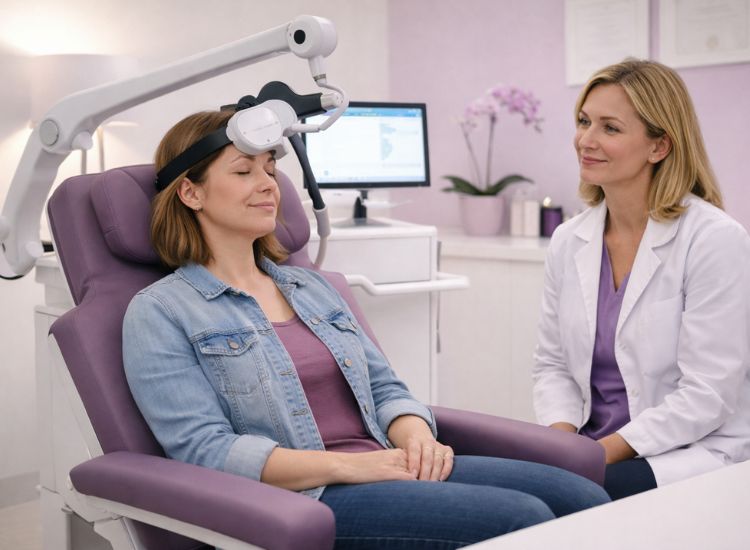

History of TMS (Part 1)
Early Discoveries in Brain Stimulation
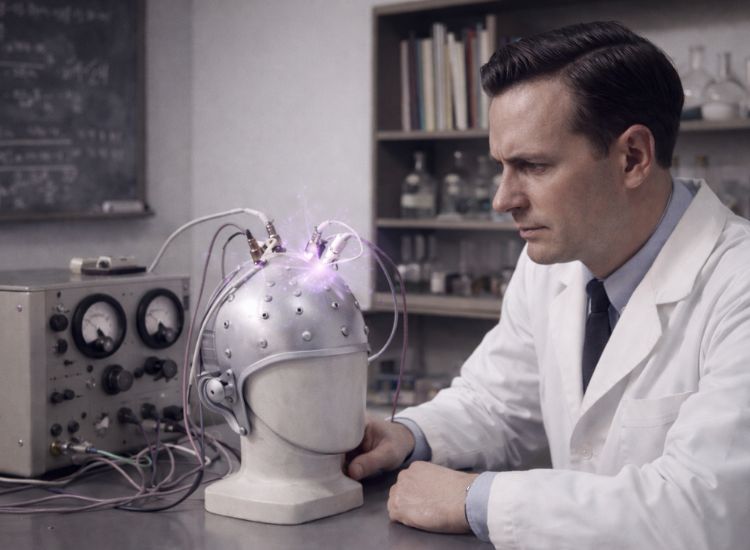
The concept of using electricity to influence muscle movement began in the 18th century, marking the initial steps toward modern brain stimulation techniques. Throughout history, scientists have explored how electrical and magnetic forces interact with the nervous system, paving the way for revolutionary treatments like Transcranial Magnetic Stimulation (TMS).
The Foundations of Electrical Stimulation
The origins of electrical stimulation research trace back to Italian scientist Luigi Galvani, who, in 1791, conducted groundbreaking experiments that demonstrated how electrical currents could cause muscle contractions in frogs. His work, detailed in De Viribus Electricitatis in Motu Musculari Commentarius, provided one of the first pieces of evidence linking electricity to biological function. Galvani’s discovery suggested that the nervous system might operate through electrical signals, a concept that laid the groundwork for further studies into neurostimulation. (Galvani, 1791)
As the scientific community grew more interested in electricity’s effects on living tissue, the 19th century saw significant advancements in understanding electromagnetism. One of the most pivotal discoveries came from Michael Faraday in 1831 when he identified the principle of electromagnetic induction. His findings, published in Experimental Researches in Electricity, demonstrated how changing magnetic fields could generate electric currents. This principle became fundamental to the development of non-invasive brain stimulation techniques, including TMS. (Faraday, 1839)
The Emergence of Direct Brain Stimulation
By the early 20th century, scientists began exploring direct electrical stimulation of the brain as a means to influence neural activity. During this period, research into brain function advanced rapidly, particularly in neurology and psychiatry. One of the most well-known interventions emerging from this research was Electroconvulsive Therapy (ECT), a procedure that involved passing electrical currents through the brain to induce controlled seizures.
ECT was initially introduced as a treatment for severe psychiatric conditions such as schizophrenia and major depressive disorder. While it proved to be effective for some patients, it was associated with significant side effects, including memory loss and cognitive impairment. This led researchers to seek alternative, less invasive ways to modulate brain activity. As a result, the mid-20th century saw increasing interest in using magnetic fields to stimulate the brain instead of direct electrical currents. (Fink, 2001)
The Shift Toward Magnetic Stimulation
While electrical stimulation had proven effective in psychiatric treatment, the search for a method that would minimize adverse effects continued. Magnetic stimulation offered an attractive alternative because it could induce electrical activity in neurons without directly applying electrodes to the scalp or brain tissue. This led to the exploration of magnetically induced currents as a possible way to affect neural function safely and non-invasively.
In the 1980s, researchers successfully developed Transcranial Magnetic Stimulation (TMS), marking a major milestone in brain stimulation technology. TMS was designed to generate a magnetic field that penetrates the skull and induces electrical activity in targeted brain regions. Unlike ECT, which caused widespread brain activation, TMS could be applied with high precision, affecting only specific neural circuits associated with psychiatric and neurological conditions. (Damasio, 1994)
Early Applications of Magnetic Stimulation
As TMS technology advanced, researchers began investigating its potential applications beyond psychiatric treatment. Early experiments demonstrated that TMS could be used to study brain function by temporarily “turning off” specific areas, creating what scientists called “virtual lesions.” This method allowed neuroscientists to explore the roles of different brain regions in cognition, movement, and perception.
Additionally, early studies explored the potential of TMS for treating neurological disorders such as Parkinson’s disease, epilepsy, and chronic pain conditions. Researchers theorized that magnetic stimulation could help rewire dysfunctional neural pathways and promote neuroplasticity, the brain’s ability to reorganize itself by forming new neural connections.
Advancing the Science of Brain Stimulation
As researchers delved deeper into the mechanisms behind TMS, several key findings emerged:
- Localized Stimulation: Unlike electrical stimulation techniques that often affect broad brain regions, TMS allows for highly localized activation of neural circuits. This makes it particularly effective for conditions like depression, where targeted modulation of the prefrontal cortex can have therapeutic effects.
- Neuroplasticity and Brain Adaptation: TMS has been shown to enhance synaptic plasticity, promoting adaptive changes in neural networks that persist beyond the stimulation period. This discovery has led to ongoing research into how TMS can support rehabilitation in stroke patients and individuals with neurological injuries.
- Safe and Non-Invasive Approach: Unlike invasive procedures such as deep brain stimulation (DBS), which requires surgical implantation of electrodes, TMS can modulate brain activity externally, minimizing risks associated with surgical interventions.
The Lasting Impact of Early Discoveries
The early research into electricity, magnetism, and neural stimulation laid the foundation for modern TMS applications. While Galvani’s work in the 18th century established the concept of bioelectricity, Faraday’s discoveries in the 19th century provided the theoretical basis for electromagnetic brain stimulation. By the 20th century, experiments with electrical brain stimulation and ECT drove the development of less invasive techniques, ultimately leading to the emergence of TMS.
Today, TMS is widely used in psychiatric clinics and research institutions worldwide. It has gained FDA approval for treating major depressive disorder, migraines, and obsessive-compulsive disorder, and ongoing research continues to explore new applications. The principles uncovered by early pioneers in electricity and magnetism remain fundamental to understanding how brain stimulation can be harnessed for therapeutic purposes.
Conclusion
The journey from early electrical stimulation experiments to modern TMS therapy illustrates the power of scientific discovery in transforming medicine. What began as simple observations of frog leg contractions in the 18th century has evolved into a sophisticated, non-invasive tool for modulating brain activity.
As researchers continue to refine TMS technology, the insights gained from historical experiments remain as relevant as ever. The future of brain stimulation is bright, with new advancements on the horizon that could further enhance our ability to treat neurological and psychiatric conditions. By building on the work of past pioneers, modern neuroscience is unlocking the full potential of non-invasive brain modulation for therapeutic use and cognitive enhancement.
Sources
Galvani, L. (1791). De Viribus Electricitatis in Motu Musculari Commentarius. Bononiae: Ex Typographia Instituti Scientiarium. https://archive.org/details/AloysiiGalvaniD00Galv
Faraday, M. (1839). Experimental Researches in Electricity. London: Bernard Quaritch. https://www.gutenberg.org/ebooks/14986
Fink, M. (2001). Electroconvulsive Therapy: A Guide for Professionals and Their Patients. Oxford University Press. https://renaissance.stonybrookmedicine.edu/sites/default/files/GE%20Fink.pdf
Damasio, A. R. (1994). Descartes’ Error: Emotion, Reason, and the Human Brain. HarperCollins. https://archive.org/details/antonio-damasio-descartes-error