

Obsessive-Compulsive Disorder (OCD) is far more than a simple preference for order or tidiness. It is a serious mental health condition that can take over daily life, creating intrusive thoughts, overwhelming anxiety, and repetitive behaviors that feel impossible to control. For someone living with OCD, daily routines can become consumed by rituals and compulsions—checking locks repeatedly, washing hands excessively, or counting actions—leaving them feeling trapped, frustrated, and mentally exhausted. Unlike the often lighthearted or exaggerated portrayals of OCD in movies and TV shows, the real-life experience is intense, disruptive, and sometimes isolating.
For many, traditional treatments such as therapy or medication provide relief, but not everyone responds to these approaches. That’s where Transcranial Magnetic Stimulation (TMS) therapy comes in. TMS is a non-invasive, FDA-approved treatment that uses targeted magnetic pulses to stimulate specific areas of the brain involved in OCD. By modulating neural activity, TMS can reduce intrusive thoughts, ease compulsions, and improve overall mental well-being. Safe, effective, and outpatient-based, TMS offers a promising alternative for those struggling with treatment-resistant OCD. Palmier TMS provides expert care and personalized treatment plans to help individuals regain control over their lives and live beyond the limitations of OCD.
Understanding OCD: More Than Just a Quirk
OCD is a complex mental health disorder characterized by obsessions and compulsions. Obsessions are intrusive, unwanted thoughts, images, or urges that trigger intense anxiety or distress. Compulsions are repetitive behaviors or mental rituals performed in response to these obsessions, often intended to reduce discomfort or prevent a feared outcome. Common examples include excessive handwashing, repeated checking, counting, or organizing items in a specific way. While these behaviors may provide temporary relief, they often interfere with daily life, work, and relationships. Understanding these two core components is essential for recognizing OCD and seeking effective treatment, such as TMS therapy.
- Obsessions: Persistent, unwanted thoughts, images, or urges that cause significant anxiety.
- Compulsions: Repetitive behaviors or mental acts performed to reduce anxiety or prevent a feared outcome.
For example, someone with OCD may repeatedly check if doors are locked, count objects in a specific sequence, or wash hands excessively to alleviate anxiety. These behaviors are often time-consuming and interfere with daily activities, work, school, and personal relationships.
While media often depicts OCD humorously—think quirky characters with minor fixations—the reality can be far more debilitating. Intrusive thoughts can be violent, sexual, or blasphemous, causing significant distress, while compulsive actions may dominate hours of a person’s day, leaving them exhausted and socially isolated.
The Impact of OCD on Daily Life
The effects of OCD extend far beyond the individual, affecting family, friends, and professional life. Loved ones may experience stress, frustration, or helplessness as they witness repetitive behaviors and intrusive thoughts. Relationships can become strained when compulsions interfere with shared responsibilities or social activities. At work or school, OCD can reduce productivity, cause missed deadlines, and make concentration difficult. The constant mental and emotional strain can also contribute to secondary issues, such as anxiety or depression. Understanding how OCD impacts both personal and social spheres highlights the importance of seeking effective treatment, like TMS therapy, for lasting relief.
- Relationships: Constant rituals can strain relationships. Loved ones may feel frustrated, anxious, or helpless.
- Work & School: Time spent on compulsions can affect productivity, attendance, and performance.
- Mental Health: OCD is often accompanied by anxiety disorders, depression, or other mental health challenges.
Because OCD affects both mind and body, finding effective treatment is crucial. Traditional therapies work for many, but they don’t always provide relief, which is why TMS therapy is gaining recognition as a groundbreaking option.
Traditional Treatments for OCD
Historically, OCD has been treated using a combination of therapy and medication, each targeting different aspects of the disorder. Cognitive Behavioral Therapy (CBT), especially Exposure and Response Prevention (ERP), helps patients confront their fears and gradually reduce compulsive behaviors. Meanwhile, medications such as Selective Serotonin Reuptake Inhibitors (SSRIs) aim to balance brain chemistry and reduce the intensity of obsessions and compulsions. While these approaches are effective for many, they don’t always provide complete relief. Some patients experience persistent symptoms, side effects from medication, or difficulty accessing consistent therapy, highlighting the need for alternative treatments like Transcranial Magnetic Stimulation (TMS).
Cognitive Behavioral Therapy (CBT)
CBT, particularly Exposure and Response Prevention (ERP), is considered the gold standard. It involves:
- Exposure: Gradually facing feared situations or thoughts.
- Response Prevention: Learning to refrain from performing compulsions in response to obsessions.
ERP has strong evidence for effectiveness, but it requires commitment, patience, and support. Some patients find it too anxiety-provoking, or struggle to access trained therapists.
Medication
Commonly prescribed medications include Selective Serotonin Reuptake Inhibitors (SSRIs) and certain antidepressants. While effective for some, medications:
- May take weeks to work
- Can cause side effects like weight gain, nausea, insomnia, or sexual dysfunction
- Sometimes provide only partial symptom relief
For those who do not respond adequately to therapy or medications, TMS therapy offers a promising alternative.
What is TMS Therapy?
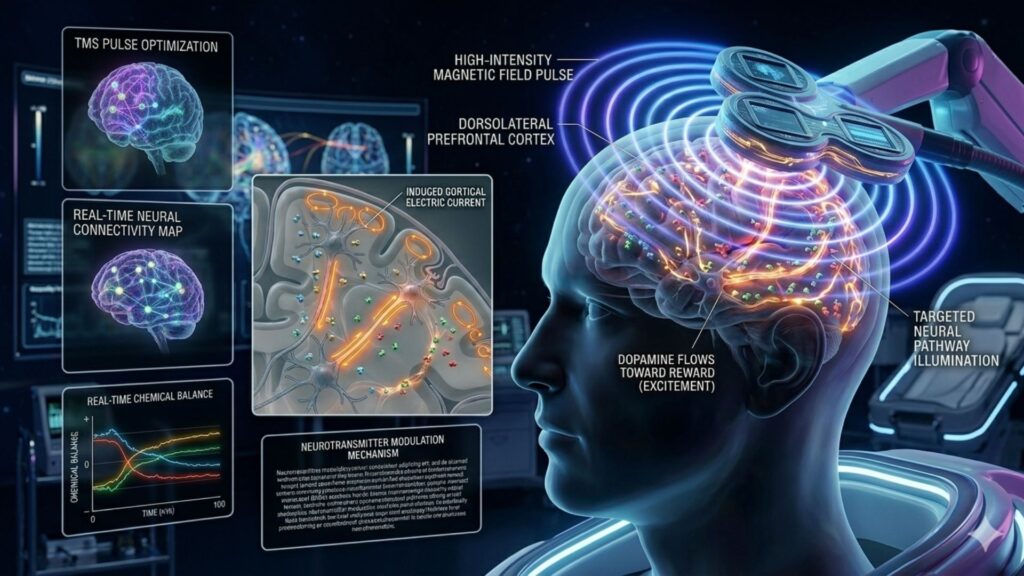
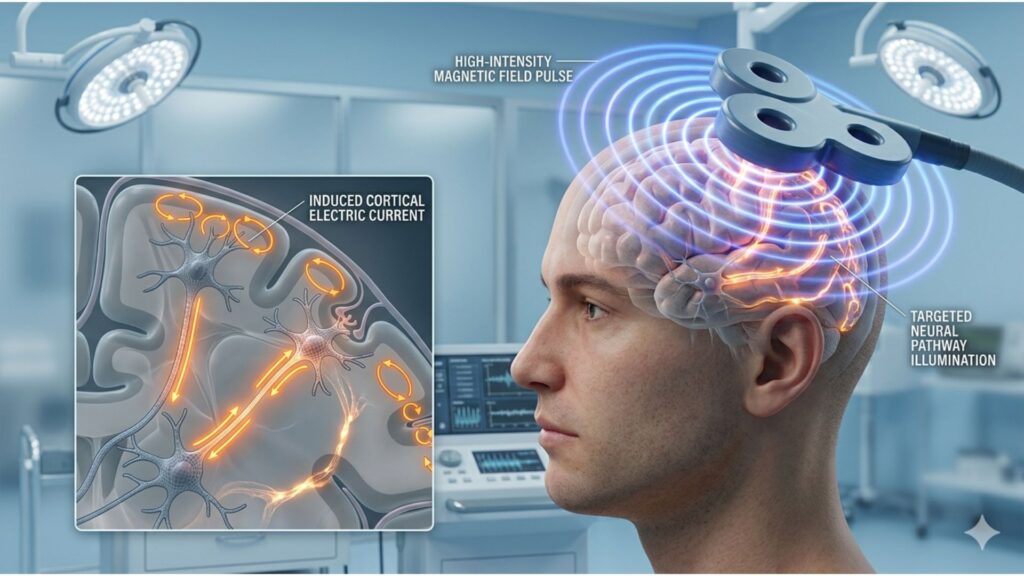
Transcranial Magnetic Stimulation (TMS) is a non-invasive, FDA-approved treatment that uses focused magnetic pulses to stimulate specific areas of the brain. By targeting neural circuits associated with OCD, TMS helps regulate abnormal brain activity that contributes to intrusive thoughts and compulsive behaviors. Unlike medications, TMS works directly on the brain without introducing chemicals into the body, which means it generally avoids systemic side effects such as nausea, weight gain, or fatigue. The procedure is outpatient, painless, and typically well-tolerated, making it an effective alternative for individuals who haven’t achieved sufficient relief through traditional therapies like medication or CBT.
How TMS Works for OCD
TMS targets regions of the brain associated with compulsions and intrusive thoughts, primarily the orbitofrontal cortex and anterior cingulate cortex. By modulating neural activity, TMS helps:
- Reduce obsessions and compulsions
- Improve mood and overall cognitive function
- Complement therapy, enhancing the effectiveness of CBT
The procedure is painless, outpatient, and generally well-tolerated. Sessions typically last 20–40 minutes, with patients often describing the experience as a gentle tapping or pulsing sensation on the scalp.
Effectiveness of TMS Therapy for OCD
Clinical studies and patient reports consistently show that TMS therapy can significantly reduce OCD symptoms, especially in individuals who have not responded to conventional treatments like medication or cognitive behavioral therapy. Research indicates that targeted magnetic stimulation of specific brain regions helps regulate abnormal neural activity linked to obsessions and compulsions. Patients often experience reduced anxiety, fewer intrusive thoughts, and decreased compulsive behaviors. Many report noticeable improvements within a few weeks of treatment. Additionally, TMS is FDA-approved for treatment-resistant OCD, demonstrating both its safety and efficacy. These findings make TMS a promising alternative for those seeking meaningful, lasting relief.
- FDA Approval: TMS is FDA-cleared specifically for treatment-resistant OCD.
- Symptom Reduction: Many patients experience noticeable improvements within weeks.
- Long-Term Relief: With continued follow-up, some patients maintain symptom relief for months or longer.
Research also shows that combining TMS with therapy can improve outcomes, offering a comprehensive approach for long-term success.
Safety and Side Effects
TMS therapy is widely considered a safe and well-tolerated treatment for OCD, with minimal side effects compared to medications or invasive procedures. Most patients experience only mild and temporary effects, such as scalp discomfort, tingling, or mild headaches during or shortly after sessions. Rarely, some individuals may feel lightheaded or fatigued, but these effects usually resolve quickly. Unlike medications, TMS does not cause systemic side effects like weight gain, nausea, or sexual dysfunction. Its non-invasive nature and strong safety profile make it a viable and appealing treatment option for individuals seeking effective relief from OCD without the risks associated with traditional therapies.
- Mild scalp discomfort or tingling
- Headache
- Rarely, lightheadedness or temporary fatigue
Importantly, TMS does not cause systemic side effects, such as weight gain, sexual dysfunction, or organ-related complications, making it a preferable option for many patients.
What to Expect During TMS Therapy
- Initial Consultation
A clinician evaluates your OCD symptoms, medical history, and treatment goals. - Treatment Planning
Each TMS protocol is customized to target your specific brain regions. - Therapy Sessions
Magnetic pulses are applied to stimulate neural activity in targeted areas. Most sessions last 20–40 minutes. - Progress Monitoring
Your response is tracked regularly, with adjustments to ensure the best results.
Many patients describe the sessions as relaxing and are able to resume normal daily activities immediately afterward.
Patient Experiences and Success Stories
Many patients report life-changing benefits from TMS therapy:
- Jane, 32, Chesterfield: “After years of struggling with compulsive checking, TMS has allowed me to regain hours of my day and reduced my anxiety dramatically.”
- Mark, 45, Richmond Heights: “I had tried medications and therapy for over a decade. TMS was the first treatment that gave me real, lasting relief.”
- Samantha, 29, Osage Beach: “The process was straightforward and painless. I finally feel like I’m in control of my thoughts again.”
Stories like these highlight the transformative potential of TMS for those living with OCD.
Combining TMS with Therapy and Medication
While TMS can be highly effective on its own, combining it with therapy or medication often produces the best results. Patients may experience faster symptom reduction, improved coping skills through CBT, and enhanced long-term relief, addressing both the neurological and behavioral aspects of OCD for a more comprehensive treatment outcome.
- Faster reduction in symptoms
- Improved coping skills through CBT
- Enhanced ability to maintain long-term improvements
This comprehensive approach addresses both the neurological and behavioral aspects of OCD.
Why Choose Palmier TMS?
Palmier TMS offers expert, personalized care for individuals with OCD across Missouri. With experienced clinicians, FDA-approved equipment, and customized treatment plans, patients receive safe and effective TMS therapy. Convenient locations in Chesterfield, Richmond Heights, and Osage Beach make accessing high-quality care simple and supportive for those seeking lasting relief.
- Experienced Clinicians: Trained in advanced TMS protocols for OCD.
- FDA-Approved Equipment: Ensures safe and effective treatments.
- Personalized Plans: Each treatment is tailored to your unique needs.
- Convenient Locations: Easily accessible across multiple cities.
FAQs About TMS Therapy for OCD
1. How long is a typical TMS treatment plan?
A standard course involves daily sessions for 4–6 weeks, with each session lasting 20–40 minutes.
2. Is TMS painful?
Most patients report minimal discomfort, often described as a tapping sensation on the scalp. Side effects are typically mild and temporary.
3. Can TMS be combined with medications or therapy?
Yes. Many patients experience the best results when TMS is used alongside CBT or ongoing medications.
4. Who is a good candidate for TMS?
Individuals with treatment-resistant OCD, or those who have not found relief from medications or therapy, may benefit most.
5. Are TMS results permanent?
TMS can provide long-lasting relief, though some patients may require maintenance sessions or ongoing therapy to sustain improvements.
6. How quickly will I notice results?
Some patients notice improvements within a few weeks, while others may require the full course for maximum benefits.
7. Are there any risks for people with metal implants?
Patients with certain metal implants or medical devices may not be candidates. A thorough evaluation ensures safety before starting treatment.
Conclusion
Obsessive-Compulsive Disorder (OCD) can feel overwhelming, affecting every aspect of daily life—from personal routines and work to relationships and overall mental health. The constant cycle of intrusive thoughts and compulsive behaviors can leave individuals feeling trapped, frustrated, and exhausted. Fortunately, effective treatment is available, and Transcranial Magnetic Stimulation (TMS) therapy has emerged as a safe, non-invasive, and clinically proven solution for those who haven’t found relief through traditional therapies such as medication or cognitive behavioral therapy.
TMS works by targeting specific brain circuits involved in OCD, helping to reduce the intensity of obsessions and compulsions. This process can restore balance to the brain, improve daily functioning, and enhance overall quality of life. Many patients report noticeable improvements within weeks, experiencing reduced anxiety, increased control over thoughts, and greater confidence in managing everyday tasks.
At Palmier TMS, experienced clinicians provide personalized treatment plans tailored to each patient’s unique needs. With multiple locations across Missouri—including Chesterfield, Richmond Heights, and Osage Beach—expert support is accessible and convenient. Don’t let OCD dictate your life any longer. Relief is possible, and freedom from intrusive thoughts and compulsive behaviors is within reach. Take the first step toward reclaiming your life today.
📞 Call or Text: 314-697-4867
🌐 Website: https://palmiertms.com
📍 Locations: Chesterfield | Richmond Heights | Osage Beach