
History of TMS (Part 4)
The Development of Repetitive TMS (rTMS)
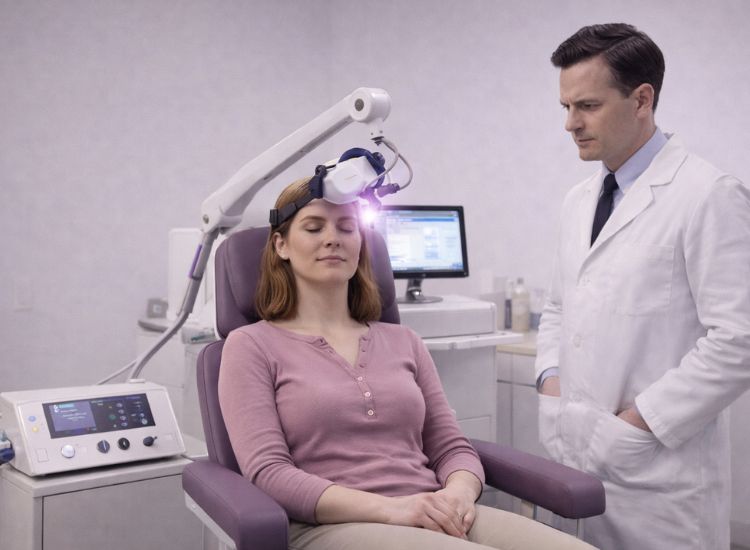
While single-pulse transcranial magnetic stimulation (TMS) was initially used in the 1980s for research and diagnostic purposes, it was limited in its ability to produce sustained effects on brain activity. The introduction of repetitive transcranial magnetic stimulation (rTMS) in the 1990s changed this by allowing multiple pulses to be delivered over time, leading to longer-lasting modulation of neural circuits.
rTMS marked a significant leap forward in the evolution of TMS, making it a potential therapeutic tool for neurological and psychiatric conditions. Researchers explored how different stimulation frequencies influence brain function, leading to critical breakthroughs in understanding how TMS could modify brain activity over extended periods.
How rTMS Works: Understanding Its Effects on the Brain
Unlike single-pulse TMS, which briefly activates neurons, rTMS delivers repeated pulses over a specific time period, allowing for more prolonged changes in neural excitability. The impact of rTMS depends on the frequency and intensity of stimulation, leading to two major categories of effects:
- High-frequency rTMS (>5 Hz):
- Increases cortical excitability by enhancing synaptic plasticity.
- Used to stimulate underactive brain regions, such as the left dorsolateral prefrontal cortex (DLPFC) in depression.
- Low-frequency rTMS (≤1 Hz):
- Decreases cortical excitability, creating an inhibitory effect on neural circuits.
- Applied in conditions like schizophrenia, where reducing hyperactive neural activity (e.g., auditory hallucinations) is beneficial.
These discoveries highlighted the potential of rTMS as a neuromodulation tool, particularly in conditions where abnormal brain excitability contributes to symptoms (George et al., 1995).
Additionally, evidence-based guidelines published by Lefaucheur et al. (2014) provided detailed recommendations for rTMS protocols, helping researchers and clinicians refine stimulation parameters for different neurological and psychiatric disorders (Lefaucheur et al., 2014).
Early rTMS Research and Its Role in Treating Depression
One of the earliest and most extensively studied applications of rTMS has been in the treatment of major depressive disorder (MDD). Traditional treatments for MDD, such as antidepressant medications, do not work for all patients, prompting researchers to explore alternative interventions.
Key Studies on rTMS and Depression
- George et al. (1995):
- Conducted one of the first rTMS trials for depression.
- Demonstrated that daily high-frequency rTMS over the left DLPFC improved mood in patients with MDD.
- Available at: https://pubmed.ncbi.nlm.nih.gov/7485622/
- Pascual-Leone et al. (1996):
- Examined the effects of rapid-rate rTMS in drug-resistant depression.
- Found significant antidepressant effects, even in patients who had not responded to conventional medication.
- Available at: https://pubmed.ncbi.nlm.nih.gov/8684201/
- O’Reardon et al. (2007):
- Conducted a large multisite randomized controlled trial (RCT) evaluating rTMS for MDD.
- Found significant reductions in depressive symptoms compared to placebo stimulation.
- Available at: https://pubmed.ncbi.nlm.nih.gov/17573044/
These studies were foundational in proving the efficacy of rTMS for treating depression and encouraged further investigations into its clinical applications beyond MDD.
Expanding rTMS to Other Disorders
As rTMS research progressed, scientists began exploring its effects on other neurological and psychiatric conditions.
1. Schizophrenia and Auditory Hallucinations
- Low-frequency rTMS (≤1 Hz) applied to the temporoparietal cortex has been found to reduce auditory hallucinations in schizophrenia.
- Works by inhibiting overactive neural pathways, decreasing the frequency and intensity of hallucinated voices.
2. Stroke Rehabilitation and Motor Recovery
- rTMS is being studied for enhancing motor recovery in stroke patients by stimulating damaged motor circuits or inhibiting overactive compensatory pathways in the unaffected hemisphere.
3. Chronic Pain and Fibromyalgia
- High-frequency rTMS over the primary motor cortex (M1) has been shown to alter pain perception by modulating the brain’s pain-processing networks.
These findings suggest that rTMS may have broad applications beyond psychiatry, particularly in neurology and pain management.
Refining rTMS Protocols: From Research to Standardized Treatment
With increased research, rTMS protocols have continued to evolve, optimizing stimulation parameters to improve efficacy and reduce side effects.
1. Optimizing Stimulation Frequency and Duration
- Early rTMS studies tested different pulse frequencies, session lengths, and total treatment durations.
- Modern research has standardized stimulation protocols, improving clinical reliability and treatment efficiency.
2. Targeting Precision: Neuronavigation-Guided rTMS
- The introduction of MRI-guided rTMS has allowed for greater accuracy in coil placement, ensuring consistent stimulation of targeted brain areas.
3. Accelerated rTMS Protocols
- Researchers have developed accelerated protocols, such as the Stanford SAINT protocol, which reduces treatment time from several weeks to just a few days while maintaining high efficacy rates.
These refinements continue to expand rTMS accessibility and improve patient outcomes.
Future Directions in rTMS Research
Despite its successes, rTMS research is still evolving, with ongoing studies focusing on:
- Personalized Stimulation – Identifying biomarkers to customize rTMS parameters based on individual brain activity patterns.
- New Treatment Applications – Investigating rTMS for bipolar disorder, anxiety disorders, PTSD, and neurodegenerative diseases.
- Portable and At-Home rTMS Devices – Exploring ways to make rTMS technology more accessible outside of clinical settings.
As research continues, rTMS is expected to become a standard treatment for a variety of brain disorders, improving both mental health and neurological rehabilitation.
Conclusion
The development of repetitive transcranial magnetic stimulation (rTMS) in the 1990s was a major breakthrough, transforming TMS from a research tool into a clinical therapy. Early trials demonstrated that rTMS could effectively modulate brain activity, leading to clinical applications for depression, schizophrenia, and chronic pain.
Through continued technological advancements and refinements in treatment protocols, rTMS has expanded beyond its original use in depression and is now being studied for a wide range of neuropsychiatric conditions. As research progresses, further improvements in targeting precision, stimulation efficiency, and accessibility are expected, solidifying rTMS as a powerful neuromodulation tool for modern medicine.
Sources:
- George, M. S., Wassermann, E. M., Williams, W. A., et al. (1995). Daily repetitive transcranial magnetic stimulation (rTMS) improves mood in depression. The American Journal of Psychiatry, 152(11), 175-181. https://pubmed.ncbi.nlm.nih.gov/8547583/
- Pascual-Leone, A., Rubio, B., Pallardó, F., & Catalá, M. D. (1996). Rapid-rate transcranial magnetic stimulation of left dorsolateral prefrontal cortex in drug-resistant depression. The Lancet, 348(9022), 233-237. https://pubmed.ncbi.nlm.nih.gov/8684201/
- O’Reardon, J. P., Solvason, H. B., Janicak, P. G., et al. (2007). Efficacy and safety of TMS in the acute treatment of major depression: A multisite randomized controlled trial. Biological Psychiatry, 62(11), 1208-1216. https://pubmed.ncbi.nlm.nih.gov/17573044/
- Lefaucheur, J. P., André-Obadia, N., Antal, A., et al. (2014). Evidence-based guidelines on the therapeutic use of repetitive transcranial magnetic stimulation (rTMS). Clinical Neurophysiology, 125(11), 2150-2206. https://pubmed.ncbi.nlm.nih.gov/25034472/